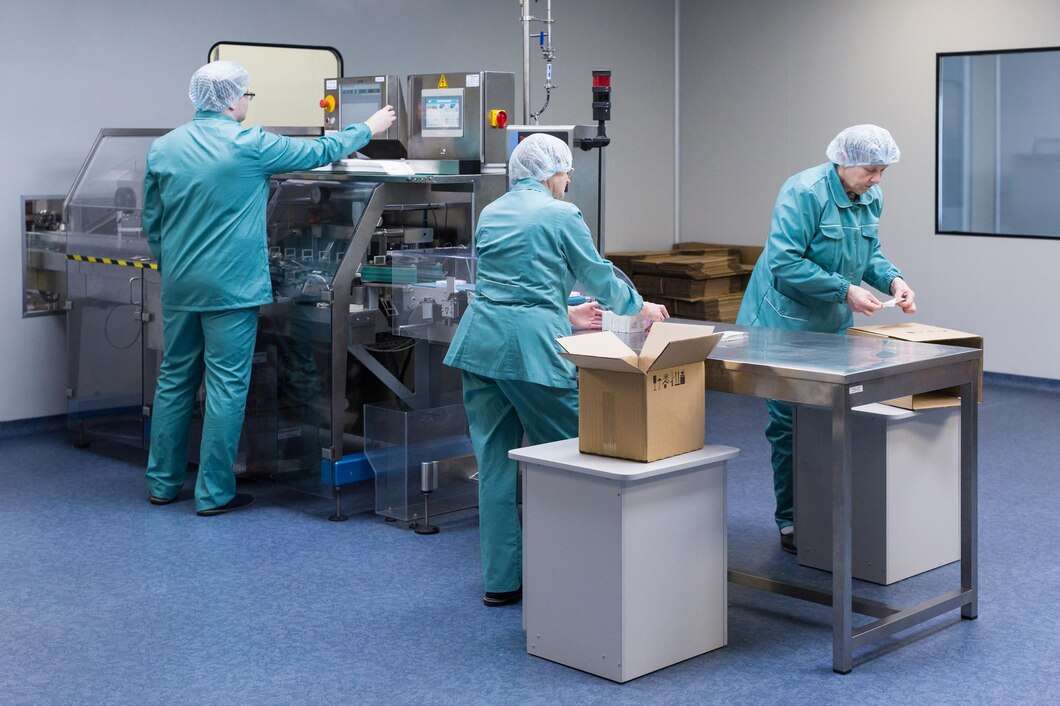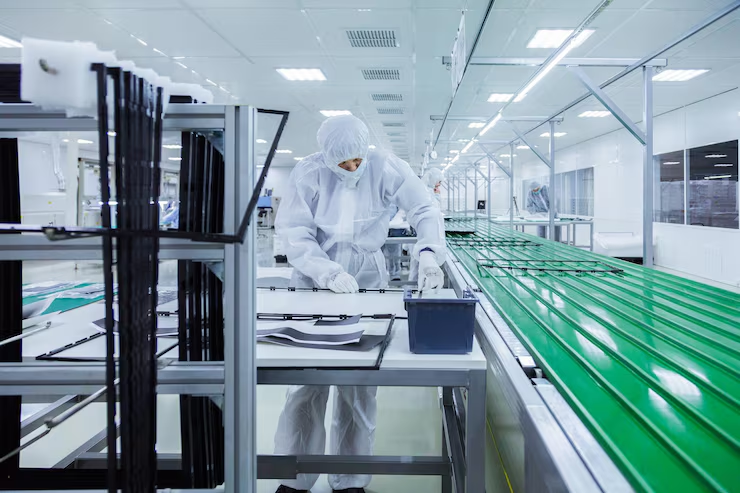
India is the world’s third-largest pharmaceutical producer by volume and a global hub for generic medicines. If you want to learn how to start a pharma manufacturing company in India, you are entering one of the most promising and regulated industries in the country. The process requires careful planning, the right licenses, a compliant pharmaceutical plant layout, and an experienced pharmaceutical consulting firm by your side.
This guide breaks down every essential step to help you move from idea to a fully operational pharma business in 2026, whether you are an investor, an entrepreneur, or a healthcare professional.
Why India Is the Right Place to Start a Pharma Company
India’s pharmaceutical sector is valued at over USD 50 billion and is projected to reach USD 130 billion by 2030, according to the Indian Pharmaceutical Alliance. The country supplies more than 50% of global vaccine demand and 20% of global generic medicines.
Key advantages of starting a pharma business in India include:
• Low manufacturing cost compared to Western countries
• Strong raw material supply chain (Active Pharmaceutical Ingredients)
• Skilled scientific and technical workforce
• Government support through PLI schemes and dedicated pharma clusters
• Established regulatory framework under the Drugs and Cosmetics Act, 1940
Types of Pharma Manufacturing Businesses You Can Start
Before you learn how to start a pharma company, it is important to choose the right business model. The main types include:
• Own Manufacturing Unit: You set up and own the plant, handle production, and sell under your brand.
• Third-Party / Contract Manufacturing: You manufacture products for other brands without running your own sales.
• Loan License Manufacturing: You use another company’s licensed facility for production, reducing initial investment.
• Pharma Franchise Business: You distribute and market products from an established manufacturer.
Choosing the right model depends on your capital, experience, and long-term goals. Pharma consultancy services from firms like JD Pharma Consultants can help you evaluate the best fit.
How to Start a Pharma Manufacturing Company: Step-by-Step Process
Step 1: Conduct Market Research and Define Your Product Range
Start by identifying the therapeutic segment you want to enter. Tablets, capsules, injectables, syrups, ointments, and nutraceuticals each have different regulatory requirements and market dynamics.
Research competitor products, pricing, and distribution channels. Use tools like IQVIA, AIOCD, and government reports to understand market demand. A focused product portfolio at the start reduces investment risk.
Step 2: Register Your Business Entity
Register your company under the Ministry of Corporate Affairs (MCA) as a Private Limited Company, LLP, or Proprietorship, depending on your structure. You will also need a Goods and Services Tax (GST) registration and a PAN.
For manufacturing, a Private Limited Company is generally recommended for investor credibility and scalability. Working with consulting firms in the pharmaceutical industry at this stage ensures you avoid legal and structural mistakes early on.
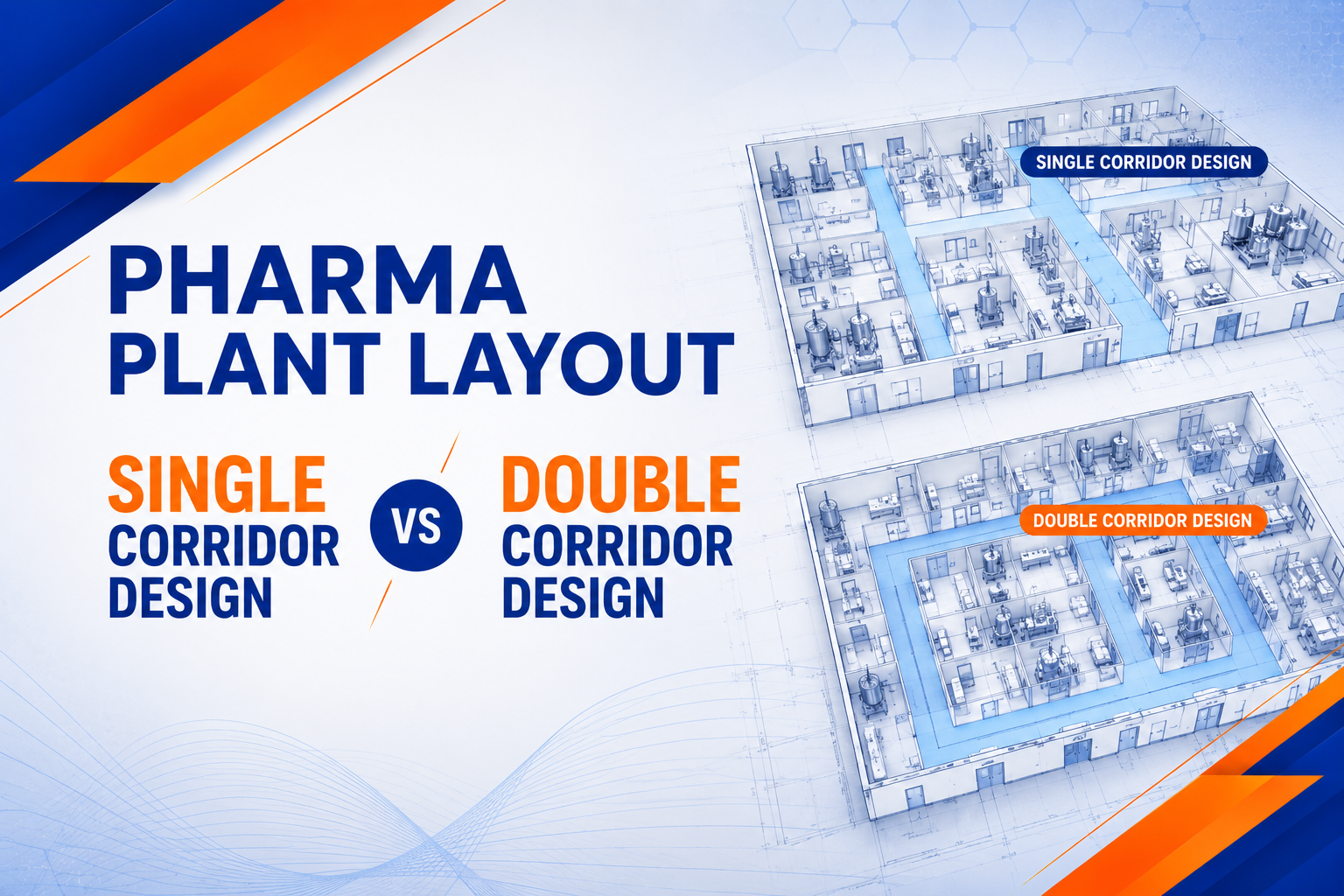
Step 3: Secure Land and Design a Compliant Pharmaceutical Plant Layout
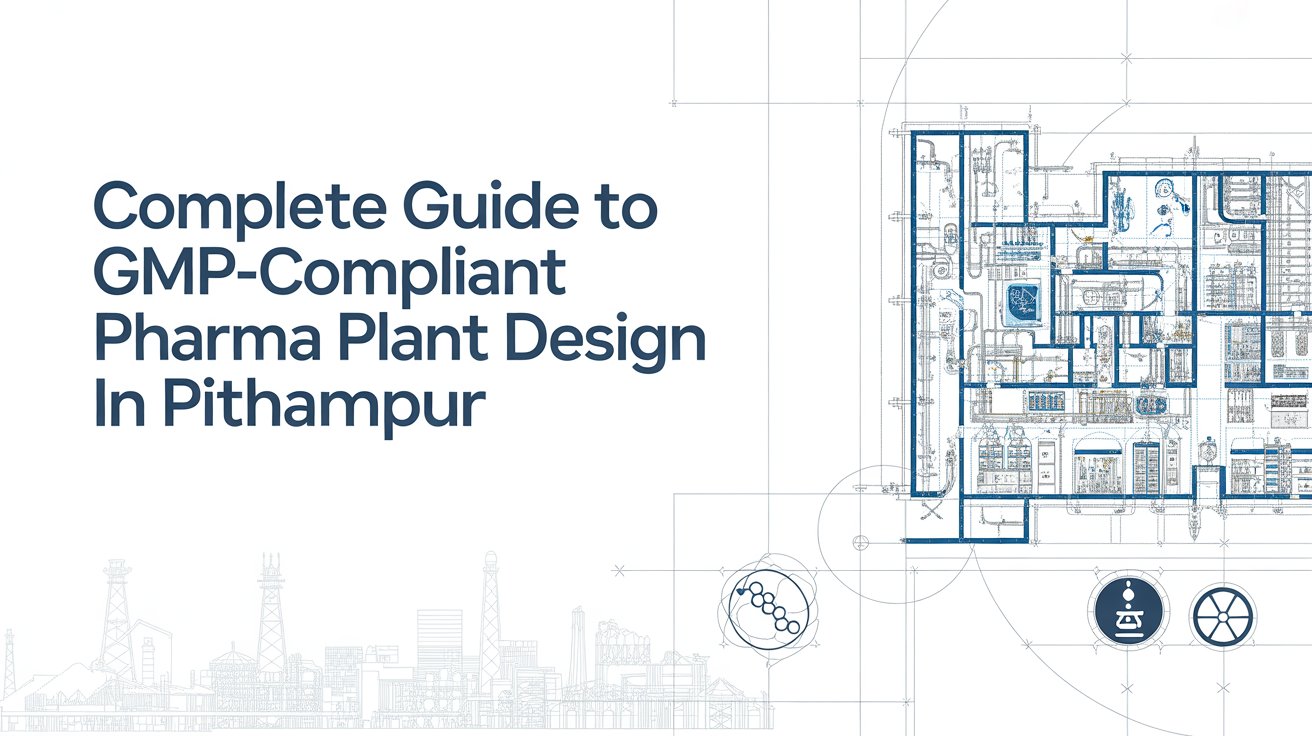
One of the most critical steps in how to start a pharma manufacturing company is designing a proper pharmaceutical plant layout. The plant layout of pharmaceutical industry must comply with Schedule M of the Drugs and Cosmetics Act and WHO-GMP guidelines.
Key areas in a compliant pharmaceutical industry plant layout include:
• Raw material storage and quarantine area
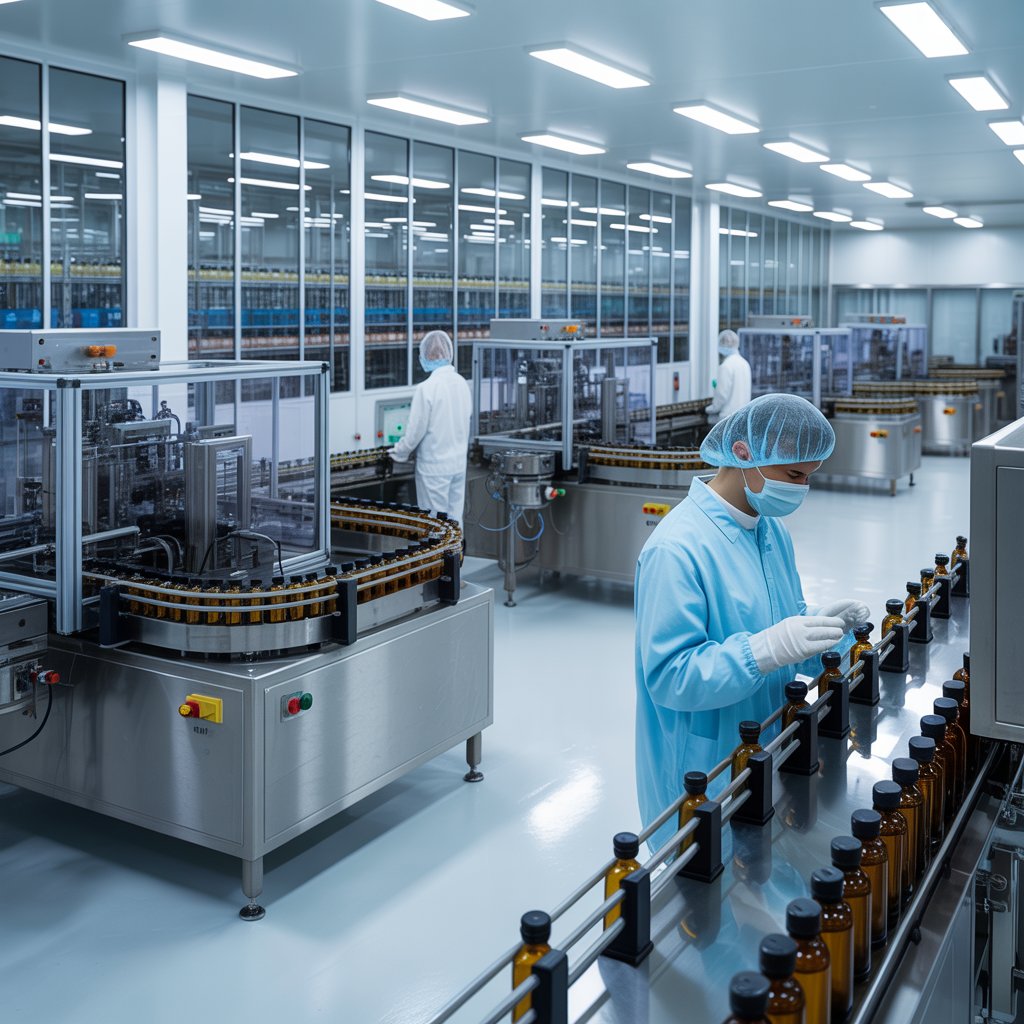
• Manufacturing area (granulation, compression, coating, filling)
• Quality control and microbiology laboratories
• Finished goods warehouse and dispatch area
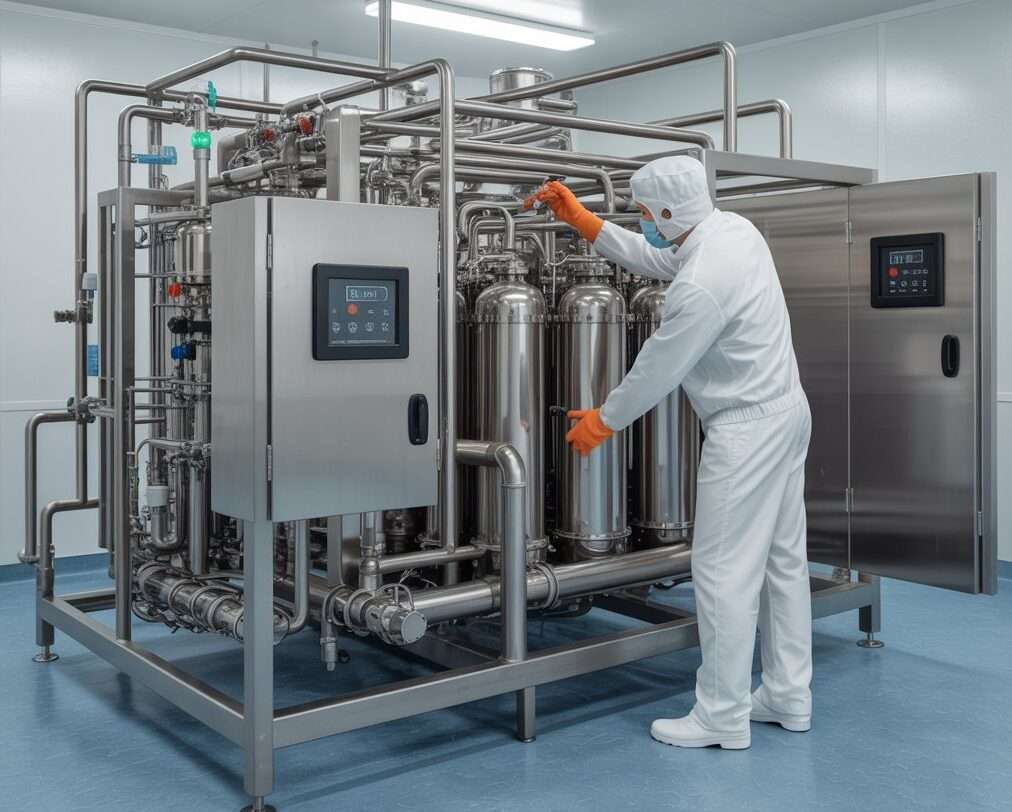
• HVAC, purified water system, and utility zones
• Changing rooms, gowning areas, and airlocks
A well-designed pharmaceutical plant layout directly impacts your license approval timeline and long-term GMP compliance. JD Pharma Consultants specializes in plant layout design for new and expanding units across India.
Step 4: Obtain the Required Licenses and Approvals
Getting the right licenses is the backbone of starting a pharma manufacturing company. The primary licenses and approvals you need include:
• Drug Manufacturing License: Issued by the State Drug Control Authority under Form 25 and 28.
• GMP Certification: Required to ensure your facility meets WHO-GMP or Schedule M standards.
• GST Registration: Mandatory for business operations and tax compliance.
• Pollution Control Board NOC: Required from the State Pollution Control Board before construction.
• Factory License: Under the Factories Act, 1948, for employing workers in the plant.
• Import Export Code (IEC): If you plan to export products or import raw materials.
• FSSAI License: Required for nutraceutical or health supplement products.
Reference: For complete license requirements, visit the Central Drugs Standard Control Organisation (CDSCO) website at cdsco.gov.in and the Drugs and Cosmetics Act portal at egateway.gov.in.
Step 5: Set Up Equipment and Hire Qualified Personnel
Install manufacturing equipment as per your approved product range and plant layout. All machinery must be validated and calibrated before production begins. This includes IQ (Installation Qualification), OQ (Operational Qualification), and PQ (Performance Qualification) protocols.
You are legally required to employ a Competent Technical Staff (CTS), which includes a registered pharmacist or a person with a degree in pharmacy, chemistry, or related sciences, as per the Drugs and Cosmetics Rules.
Step 6: Develop SOPs and Quality Management Systems
Standard Operating Procedures (SOPs) govern every activity in the plant, from raw material receipt to product dispatch. A robust Quality Management System (QMS) ensures consistency, regulatory compliance, and product safety.
Key QMS elements include Batch Manufacturing Records (BMR), deviation management, change control, CAPA (Corrective and Preventive Action), and internal audits. Pharma consulting firms like JD Pharma Consultants can build your entire SOP and QMS documentation from scratch.
Step 7: Plan Your Investment and Funding Strategy
The investment required to start a pharma manufacturing unit in India varies by dosage form and scale. A small oral solid dosage (OSD) plant typically requires INR 2 to 5 crore, while injectable or sterile units may require INR 10 crore or more.
Funding options include bank loans under MSME schemes, government PLI (Production Linked Incentive) schemes for pharmaceuticals, venture capital, and self-funding. The government’s PLI Scheme for Pharmaceuticals offers incentives for API and formulation manufacturing.
Reference: For PLI Scheme details, visit the Department of Pharmaceuticals, Government of India at pharmaceuticals.gov.in.
Step 8: Build Your Sales and Distribution Network
A manufacturing unit without a distribution network cannot sustain itself. You can sell through your own marketing team (ethical/prescription model), partner with a pharma franchise network, or supply to institutional buyers and hospitals.
Registering your products on the Government e-Marketplace (GeM) is another effective channel, especially for government hospital tenders. Exporting to regulated markets like the US, EU, and Africa requires additional approvals such as USFDA, EU GMP, or WHO-GMP certifications.
Why Partner With a Pharmaceutical Consulting Firm?
Navigating drug regulations, plant design, and license approvals simultaneously is complex. Experienced pharmaceutical consulting firms reduce your risk, save time, and help you avoid costly mistakes. Pharma consultancy services typically cover:
• Project feasibility and investment planning
• Pharmaceutical plant layout design and validation
• Drug license and GMP certification support
• SOP, BMR, and QMS documentation
• Regulatory filings and inspection preparation
• Product registration for domestic and export markets
JD Pharma Consultants has served over 200 pharma clients across India, delivering end-to-end support from concept to commercial production. Our team of regulatory experts, plant designers, and quality specialists makes us one of India’s most trusted consulting firms in the pharmaceutical industry.
FAQs About How to Start a Pharma Manufacturing Company
Q1. What is the minimum investment required to start a pharma manufacturing company in India?
The minimum investment depends on the dosage form and scale. A basic oral solid dosage (tablet/capsule) unit can be set up , covering land, construction, equipment, and licenses. Injectable or sterile facilities require or more due to stricter environmental controls and equipment requirements.
Q2. What licenses are needed to start a pharma manufacturing unit?
You need a Drug Manufacturing License (Form 25/28) from the State Drug Controller, GMP certification, GST registration, Factory License, and a Pollution Control Board NOC. If you plan to manufacture nutraceuticals or health supplements, an FSSAI license is also required.
Q3. How long does it take to get a drug manufacturing license in India?
On average, it takes 6 to 18 months to obtain a drug manufacturing license, depending on the state, product type, and completeness of your application and plant infrastructure. Working with experienced pharma consulting firms can significantly reduce this timeline by ensuring your documents and plant meet inspection standards the first time.
Q4. What is Schedule M in pharma and why is it important?
Schedule M is a part of the Drugs and Cosmetics Rules, 1945, that defines Good Manufacturing Practices (GMP) for pharmaceutical manufacturers in India. It covers requirements for plant premises, equipment, personnel, documentation, and quality systems. Compliance with Schedule M is mandatory for obtaining and maintaining a drug manufacturing license.
Q5. Do I need a pharmacist to run a pharma manufacturing unit?
Yes. The Drugs and Cosmetics Act requires at least one registered pharmacist or a technically qualified person (B.Pharm, M.Pharm, or equivalent chemistry degree) as a Competent Technical Staff (CTS) for each licensed product category. Their presence is mandatory at all times during manufacturing.
Ready to Start Your Pharma Manufacturing Journey? Talk to JD Pharma Consultants Today
Starting a pharma company in India is a rewarding opportunity, but the regulatory and operational complexity demands expert guidance. JD Pharma Consultants is India’s trusted name in pharma consultancy services, offering complete support from plant layout design and license application to GMP compliance and product registration.
Whether you are a first-time entrepreneur or an established business looking to expand, our pharmaceutical consulting firm team is ready to guide you at every step.
Contact JD Pharma Consultants now for a consultation and let us help you build a compliant, future-ready pharma manufacturing company.