Choosing the right pharmaceutical plant layout is one of the most important decisions a manufacturer makes before construction even begins. The debate between single corridor pharmaceutical plant layout and double corridor pharmaceutical plant layout designs affects everything from material flow to regulatory approval. At JD Pharma Consultants, a trusted pharmaceutical consulting firm, we help clients evaluate both approaches so they can build facilities that are efficient, compliant, and future-ready.
This guide breaks down the differences between these two layout strategies in plain language. Whether you are planning a new facility or upgrading an existing one, understanding pharmaceutical plant layout design options will help you make a smarter, more cost-effective decision.
What Is Pharmaceutical Plant Layout Design?
Pharmaceutical plant layout design refers to the physical arrangement of rooms, equipment, corridors, and utility areas within a manufacturing facility. A good layout of pharmaceutical manufacturing plant ensures smooth movement of materials, personnel, and equipment while minimizing contamination risks.
The layout also determines how easily a facility meets GMP compliant pharmaceutical plant design standards set by regulatory bodies such as the World Health Organization and the US FDA. A poorly planned pharmaceutical factory layout can lead to cross-contamination, production delays, and costly redesigns later.
Two corridor-based design philosophies dominate the industry today. These are the single corridor system and the double corridor system. Each has distinct advantages depending on the scale, product type, and budget of the operation.
Understanding Single Corridor Pharmaceutical Plant Layout
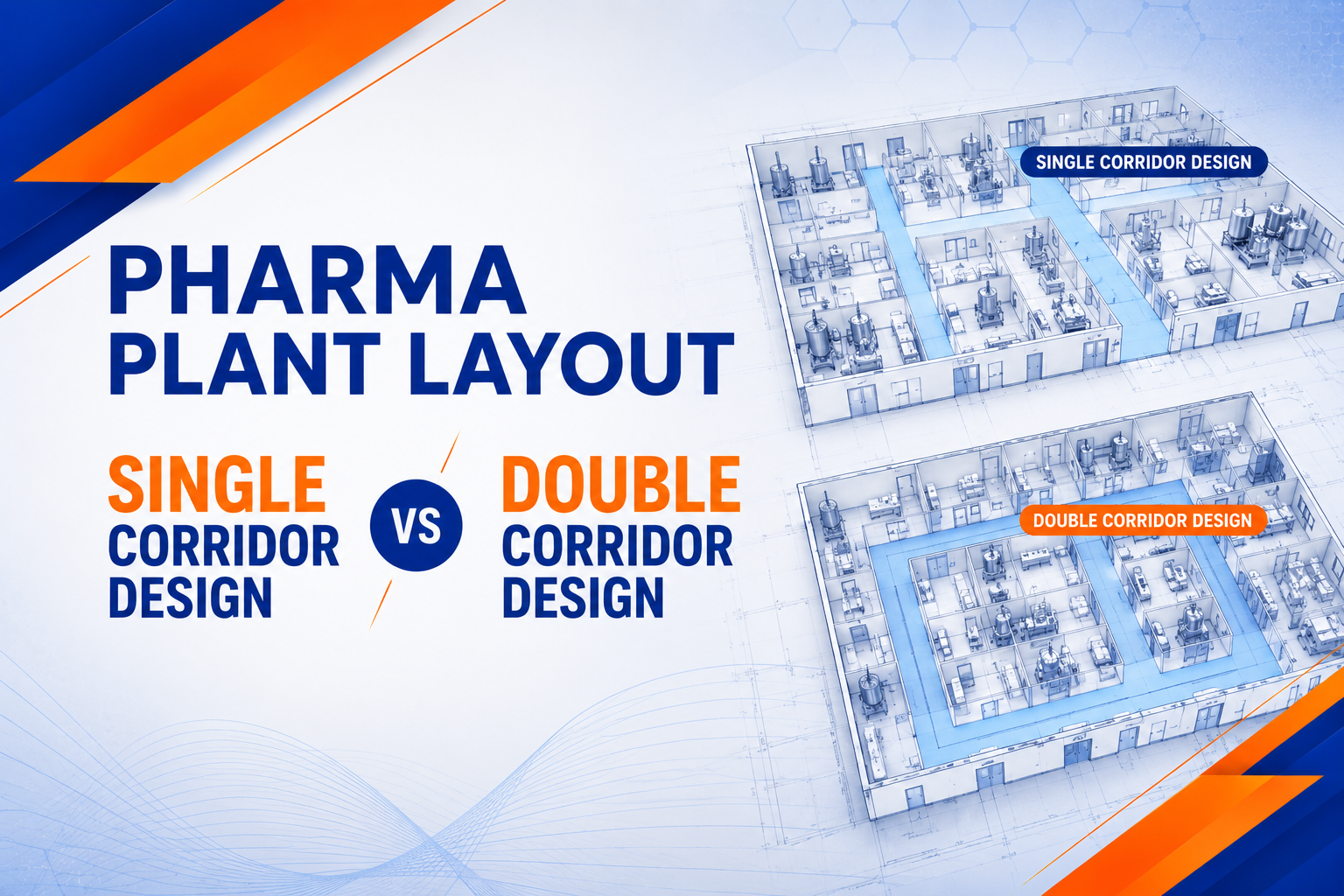
A single corridor pharmaceutical plant layout uses one main passage that connects to all production and support rooms. Personnel, raw materials, and finished goods often share this same corridor, though airlocks and gowning rooms help manage contamination risk.
This design is common in smaller facilities or those with limited land area. It is also a popular choice for companies just starting pharma plant layout design projects on a tighter budget.
Key Features of Single Corridor Design
- One central corridor serves as the primary movement path for staff and materials.
- Airlocks are placed at room entry points to control contamination between zones.
- Construction costs are generally lower due to reduced floor area and simpler ductwork.
- The footprint is more compact, making it suitable for smaller plots of land.
Advantages of Single Corridor Layout
The biggest benefit of this pharmaceutical manufacturing plant layout design is cost efficiency. Less corridor space means lower construction and HVAC costs, which matters for small and mid-sized manufacturers.
Single corridor designs also simplify supervision. Since most rooms open onto one passage, staff can monitor activity and respond to issues more quickly.
Maintenance is easier too. With fewer corridors and a smaller mechanical footprint, repairs and inspections take less time and resources.
Limitations of Single Corridor Layout
The main drawback is the risk of cross-traffic. When personnel and material movement overlap in the same corridor, contamination risk increases, especially in sterile or high-potency product areas.
This layout can also become a bottleneck during high-volume production. As output scales up, a single passage may not handle the increased flow of people and goods efficiently.
Understanding Double Corridor Pharmaceutical Plant Layout
A double corridor pharmaceutical plant layout separates personnel movement from material movement using two distinct corridors. One corridor is dedicated to staff entry and exit, while the other handles raw materials, intermediates, and finished products.
This separation is a core principle behind many GMP compliant pharmaceutical plant design strategies, particularly for facilities producing sterile injectables, oncology drugs, or other high-risk formulations.
Key Features of Double Corridor Design
- Two separate corridors minimize the chance of personnel and material paths crossing.
- Each corridor connects to dedicated entry and exit points for better traceability.
- The design supports unidirectional flow, which strengthens contamination control.
- It generally requires a larger building footprint and higher upfront investment.
Advantages of Double Corridor Layout
The strongest advantage of this pharmaceutical factory layout is contamination control. Separating people from product reduces the chance of particulate or microbial transfer between zones.
This layout also supports better regulatory compliance. Auditors from agencies like the FDA and EMA often view dual-corridor systems favorably because they demonstrate a deliberate approach to risk reduction.
Scalability is another strong point. Double corridor systems handle higher production volumes more comfortably since material and personnel traffic do not compete for the same space.
Limitations of Double Corridor Layout
Cost is the most significant challenge. Building two corridor systems means more floor area, more HVAC ductwork, and a larger overall construction budget.
Land requirements are higher as well. Facilities with limited plot size may struggle to accommodate the extra space this pharmaceutical plant layout demands.
Energy consumption can also increase. More square footage usually means higher costs for heating, cooling, and air filtration over the life of the facility.
Single Corridor vs Double Corridor: A Side-by-Side Comparison
Choosing between these two pharmaceutical plant layout design approaches depends on several practical factors. Here is a simplified comparison to guide decision-making.
- Cost: Single corridor layouts cost less to build and operate. Double corridor layouts require higher capital investment.
- Contamination Control: Double corridor designs offer superior separation of personnel and material flow.
- Space Requirement: Single corridor designs need less land. Double corridor designs need a larger footprint.
- Production Scale: Single corridor suits small to mid-sized operations. Double corridor suits high-volume or high-risk manufacturing.
- Regulatory Scrutiny: Double corridor layouts often align more easily with strict GMP compliant pharmaceutical plant design expectations for sterile products.
Neither design is universally better. The right choice depends on the product type, batch size, regulatory market, and available budget.
How to Choose the Right Pharma Plant Layout Design
Selecting the correct pharma plant layout design requires careful planning before construction drawings are finalized. Consider these factors first.
Product Risk Profile
Sterile injectables, biologics, and oncology drugs typically demand stricter contamination controls. A double corridor system often makes more sense for these high-risk categories.
Oral solid dosage forms like tablets and capsules may not need the same level of separation. A single corridor layout can be sufficient and more cost-effective for these products.
Budget and Long-Term Operating Costs
Initial construction cost is only part of the equation. Facilities should also evaluate long-term operating expenses, including energy use, staffing needs, and maintenance costs.
A well-documented framework from the International Society for Pharmaceutical Engineering offers practical baseline guidance on facility design principles that many consultants use during early planning stages<sup>3</sup>.
Future Expansion Plans
Companies planning to scale production within the next five to ten years should think beyond their current needs. A double corridor system, while costlier now, may save money later by avoiding a complete redesign..
Why Work With a Trusted Pharmaceutical Consulting Firm
Designing a compliant and efficient facility is not something to handle alone. JD Pharma Consultants brings hands-on experience helping pharmaceutical manufacturers plan layouts that balance compliance, cost, and operational efficiency.
Our team has guided clients through facility planning for oral solids, sterile injectables, and biologics manufacturing. We understand the regulatory expectations of agencies across multiple markets and translate that knowledge into practical, buildable designs.
As a trusted pharmaceutical consulting firm, we do not offer one-size-fits-all advice. Every recommendation is based on your specific product type, production volume, budget, and growth plans.
What is the main difference between single and double corridor pharmaceutical plant layout?
A single corridor layout uses one shared passage for personnel and materials, while a double corridor layout uses two separate corridors to keep people and product movement apart, reducing contamination risk.
Which layout is better for GMP compliance?
Double corridor layouts generally align more closely with strict GMP compliant pharmaceutical plant design standards because they physically separate personnel flow from material flow.
Is single corridor layout cheaper to build?
Yes, single corridor layouts typically cost less because they require less floor space, shorter corridors, and simpler HVAC ductwork compared to double corridor systems.
FAQs Related To Pharmaceutical Plant Layout
1. What factors should influence the choice of pharmaceutical plant layout? The product’s risk profile, target regulatory markets, production volume, available land, and budget all influence whether a single or double corridor design is the better fit.
2. Can a single corridor layout still meet GMP standards? Yes, a single corridor layout can meet GMP compliant pharmaceutical plant design standards if airlocks, gowning procedures, and traffic control measures are properly implemented.
3. How much more does a double corridor layout cost compared to single corridor? Costs vary by project, but double corridor layouts often increase construction costs by a noticeable margin due to the larger footprint and additional HVAC requirements. A detailed cost analysis from a qualified consultant is recommended for accurate figures.
4. Is double corridor design necessary for all sterile manufacturing facilities? Not always, but it is strongly recommended for high-risk sterile products like injectables, where contamination control is critical to patient safety and regulatory approval.
5. Can an existing single corridor facility be converted to a double corridor design? In many cases, yes, though it depends on the building’s existing structure and available space. A facility audit by an experienced pharmaceutical plant layout design consultant can determine feasibility.
Plan Your Pharmaceutical Facility With Confidence
Choosing between a single corridor and double corridor pharmaceutical plant layout is a decision that shapes your facility’s compliance, efficiency, and long-term costs. Getting expert guidance early can save significant time and money down the line.
JD Pharma Consultants has the experience and regulatory knowledge to help you design a facility that fits your product, budget, and growth plans. Contact JD Pharma Consultants our team today for a personalized consultation on your pharmaceutical plant layout design project and take the first step toward a compliant, efficient, and future-ready facility.