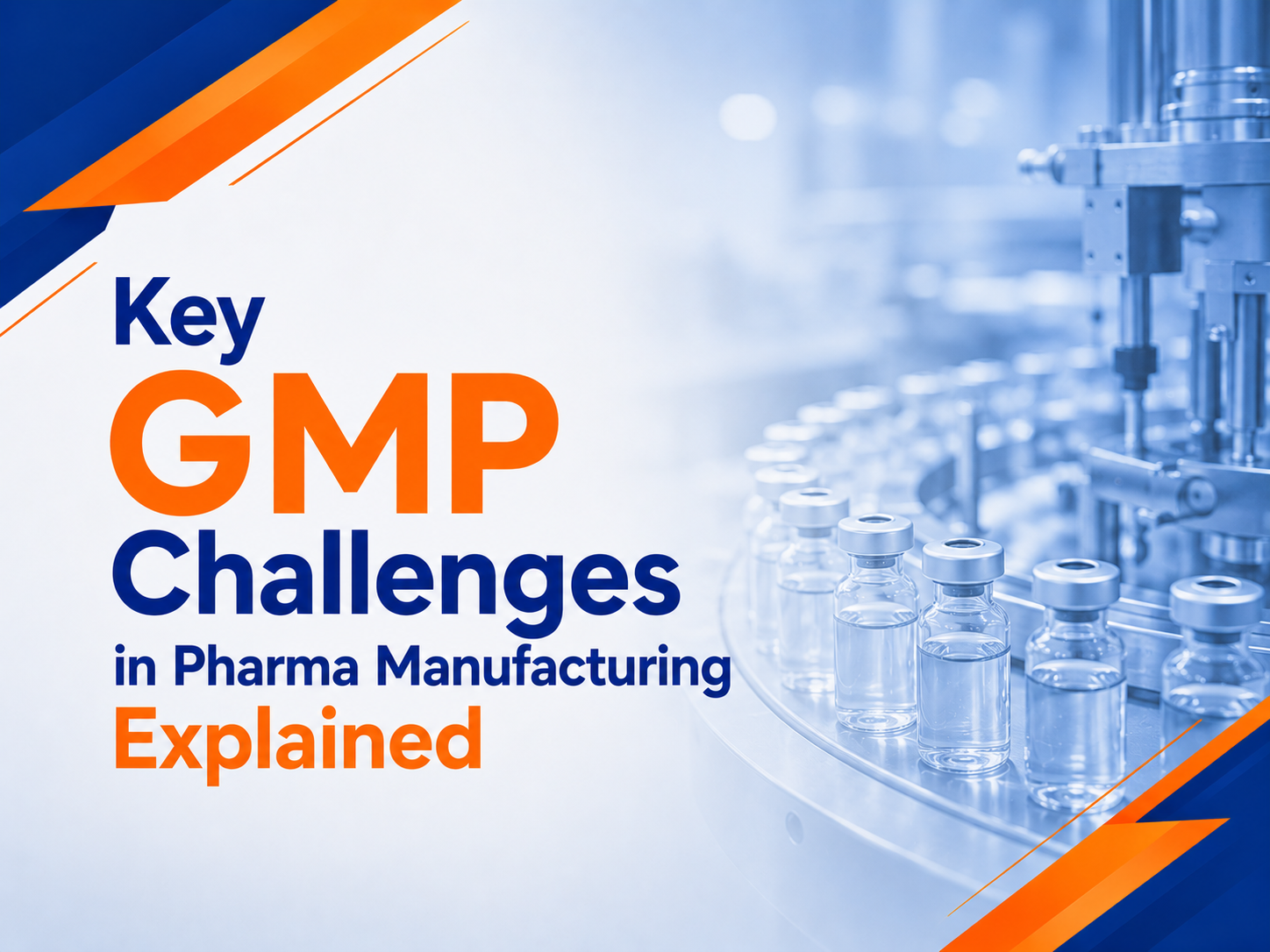
| The key GMP challenges in pharma manufacturing include maintaining consistent documentation, managing equipment qualification, ensuring staff competency, upholding data integrity, and passing GMP audits. GMP compliance consulting helps manufacturers address these gaps proactively before they attract regulatory scrutiny from agencies such as the FDA or EMA. |
GMP challenges in pharma manufacturing are a constant concern for quality teams, plant managers, and pharmaceutical consulting firms alike. Whether you operate a small formulation unit or a large-scale sterile facility, meeting every requirement of GMP guidelines pharma regulations demands rigorous systems, trained people, and airtight processes.
This guide breaks down the most pressing pharma GMP compliance issues that manufacturers face today. It also explains how expert GMP consulting services can help you close gaps, prepare for inspections, and build a culture of quality that lasts.
What Is GMP in Pharma and Why Does It Matter?
GMP Audit in pharma stands for Good Manufacturing Practice. It is the set of standards that ensures medicines are consistently produced and controlled according to quality standards suitable for their intended use. Regulatory bodies such as the US FDA, the European EMA, and India’s CDSCO all mandate compliance with these standards.
cGMP pharma refers to the current version of these standards. The “c” signals that manufacturers must stay updated with the latest regulatory expectations, not just follow outdated procedures. Failing to meet cGMP requirements can result in warning letters, import alerts, or even facility shutdowns.
Key GMP Challenges in Pharma Manufacturing: An In-Depth Look
Understanding the specific areas where pharma manufacturing problems arise is the first step to solving them. Below are the most frequently cited GMP audit issues across global manufacturing sites.
| 01. Documentation Failures Missing records, incomplete batch logs, and untrained writers lead to the majority of cGMP citations worldwide. | 02. Data Integrity Breaches Altered electronic records, back-dated entries, and inadequate audit trails are red flags in every regulatory inspection. | 03. Staff Training Gaps Undertrained operators and inadequate SOPs are primary contributors to out-of-specification results and deviations. |
| 04. Equipment Qualification Poorly qualified or unvalidated equipment creates risk throughout the product lifecycle, from raw materials to final release. | 05. Change Control Weakness Uncontrolled process changes bypass risk assessment and can introduce quality defects that reach patients. | 06. Supplier Quality Management Unqualified or uninspected raw material vendors expose manufacturers to contamination and compliance risk. |
How GMP Documentation Gaps Trigger Regulatory Action
GMP documentation is the backbone of any compliant pharmaceutical operation. Every batch, every deviation, every cleaning activity must be recorded accurately and in real time. When documentation is missing or altered, it signals to regulators that your quality system cannot be trusted.
Common documentation failures seen in GMP audit consultant reports include:
• Blank or incomplete batch manufacturing records
• Failure to complete entries at the time of performance
• Overwriting or correction fluid on paper records without proper notation
• Electronic systems without proper audit trail functions enabled
• SOPs that are outdated, unavailable at point of use, or not followed in practice
Engaging GMP compliance consulting professionals to audit your documentation systems before a regulatory visit is one of the most effective risk management strategies available to modern pharma manufacturers.
Data Integrity: The Fastest-Growing GMP Compliance Challenge
Data integrity has become one of the most scrutinized areas in pharmaceutical compliance globally. Both the FDA and MHRA have issued dedicated guidance documents on the subject. Regulators expect data to be Attributable, Legible, Contemporaneous, Original, and Accurate (ALCOA+).
| Key Insight Data integrity violations are not limited to electronic systems. Paper-based records are equally susceptible, particularly in facilities that still rely heavily on manual entry and physical batch records. |
GMP consulting companies consistently identify data integrity as a top gap during readiness assessments. Facilities that invest in computerized system validation (CSV), role-based access controls, and routine self-inspections significantly reduce their regulatory exposure.
Why Staff Training Remains a Persistent GMP Challenge in Pharma
Many pharma consulting firms report that training gaps are behind a high percentage of deviations and non-conformances. Operators who do not fully understand the rationale behind a procedure are more likely to take shortcuts or fail to escalate issues in a timely way.
Effective GMP training is not a one-time event. It requires:
• Role-specific training mapped to job responsibilities
• Ongoing refresher sessions tied to SOP updates or deviation trends
• Documented competency assessments, not just attendance records
• A training matrix that tracks completion and expiry dates
Pharma consultancy services from experienced firms can help design training frameworks that satisfy both internal quality needs and external inspection requirements.
GMP Audit Issues: What Inspectors Look for Most
A GMP audit is a structured review of your quality systems against applicable regulations. Whether it is an internal self-inspection or an external assessment conducted by GMP audit consulting professionals, the objective is the same: identify gaps before regulators do.
The most frequent observations from pharma GMP compliance audits include deficiencies in:
• Environmental monitoring and contamination control programs
• Equipment cleaning validation and maintenance logs
• Deviation and CAPA management systems
• Out-of-specification (OOS) investigation procedures
• Annual product reviews and stability program oversight
Utilizing Third Party Audit Services provides an unbiased, independent view of your site’s compliance posture. Third-party auditors bring cross-industry experience and see gaps that internal teams often overlook because of familiarity bias.
GMP Certification in Pharma: What It Means and How to Achieve It
GMP certification pharma is the formal recognition that a facility meets applicable manufacturing standards. Certificates are issued by regulatory authorities following successful inspections, or by accredited certification bodies for specific market access purposes such as WHO prequalification.
Achieving and maintaining GMP certification requires sustained effort across every function, including production, quality control, quality assurance, warehousing, and utilities management. It is not a destination but a continuous process of improvement and compliance.
How GMP Consulting Companies Support Pharma Manufacturers
Partnering with experienced GMP consulting companies gives manufacturers access to regulatory expertise, objective gap assessments, and proven remediation strategies. A good pharma consultancy services provider will not just identify problems but help implement sustainable solutions.
At JD Pharma Consultants, our GMP consultancy services cover the full compliance lifecycle, from pre-approval inspections to post-market surveillance readiness. Our team has hands-on experience with FDA, EMA, WHO, and national health authority requirements across multiple dosage forms and manufacturing categories.
FAQs About GMP Challenges in Pharma Manufacturing
Q: What are the most common GMP challenges in pharma manufacturing?
The most common GMP challenges include poor documentation practices, inadequate staff training, inconsistent equipment qualification, data integrity failures, and gaps identified during GMP audits. Each of these can lead to regulatory action if left unaddressed. Proactive GMP compliance consulting helps manufacturers catch these issues before inspectors do.
Q: Why is pharma GMP compliance so difficult to maintain?
Pharma GMP compliance is difficult because it requires consistent adherence across people, processes, equipment, and documentation simultaneously. Regulatory expectations also evolve over time, requiring continuous updates to quality systems. GMP consulting companies help bridge these gaps by keeping manufacturers current with the latest guidance.
Q: How often should a pharmaceutical facility conduct a GMP audit?
Most pharma manufacturers conduct internal GMP audits at least once a year. Third Party Audit Services are also recommended to provide an unbiased view of your compliance status, especially before a regulatory inspection. Pharma GMP audit consulting specialists can simulate regulatory inspection conditions to identify gaps in advance.
Q: What is the role of a GMP consulting company?
A GMP consulting company helps pharmaceutical manufacturers identify compliance gaps, prepare for regulatory inspections, improve documentation systems, and implement cGMP pharma best practices. They bring external expertise that internal teams may lack, particularly for complex issues like data integrity remediation or computerized system validation.
Q: What is the difference between GMP and cGMP in pharma?
GMP in pharma refers to Good Manufacturing Practice, the baseline standard for pharmaceutical production. cGMP pharma stands for current Good Manufacturing Practice, meaning the most up-to-date interpretation of those standards as defined by regulators such as the FDA and EMA. The “current” requirement means manufacturers cannot rely on outdated procedures and must continuously update their quality systems.
| Ready to Solve Your GMP Compliance Challenges? Whether you need a comprehensive GMP audit, documentation system review, or ongoing pharma consultancy services, JD Pharma Consultants is here to help you build a facility that passes every inspection with confidence. |