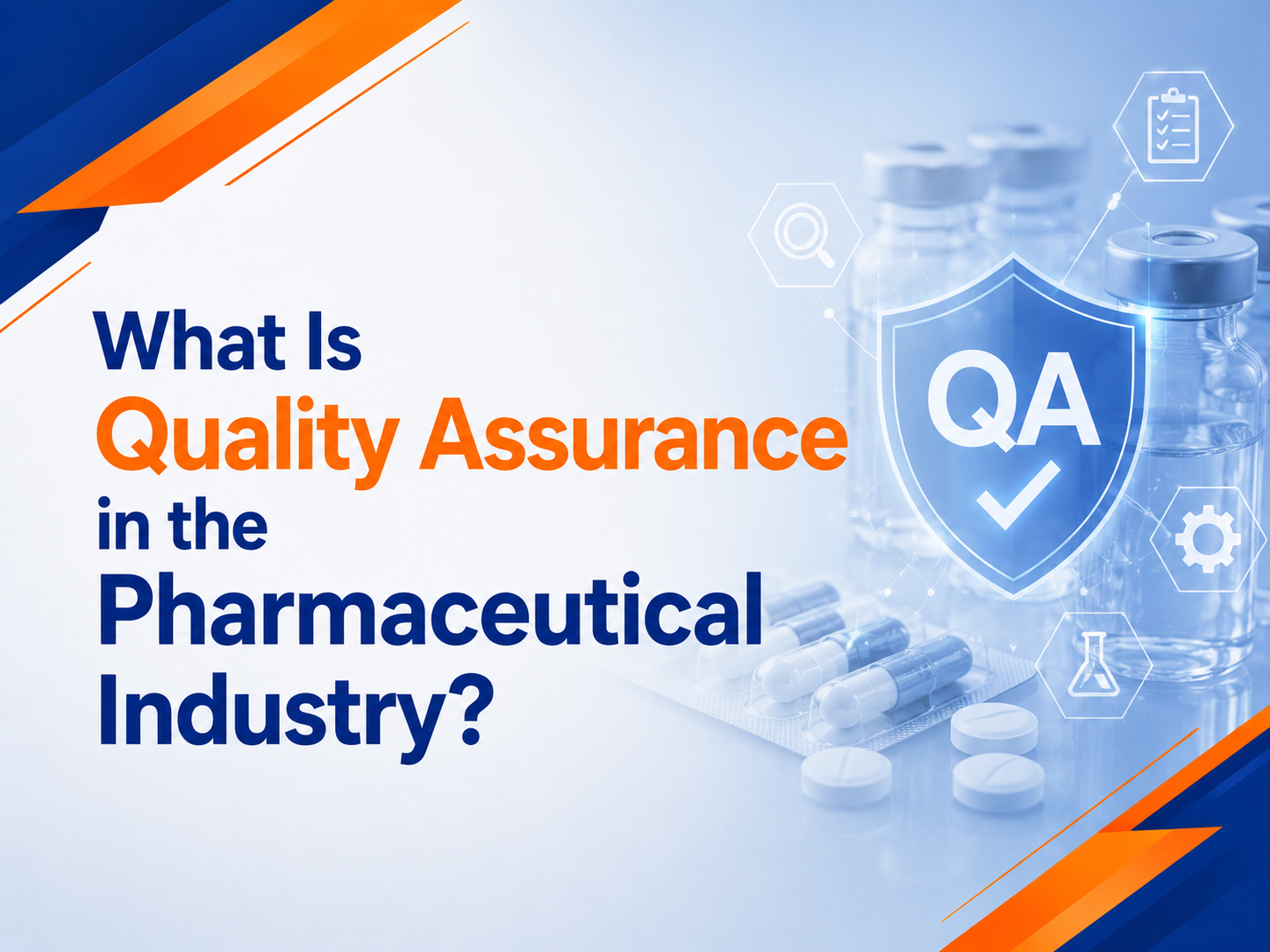
The term Quality Assurance in the Pharmaceutical Industry refers to the complete system of planned, systematic activities that guarantee medicines are produced and controlled to the quality standards required for their intended use. It is not a single test or a one-time activity. It is a living framework that governs every stage of the drug lifecycle, from raw material sourcing to final product delivery.
For patients, quality assurance means safety. For regulators, it means compliance. For pharma companies, it means staying in business. Without a robust quality framework, even a small error in formulation, labeling, or storage can lead to product recalls, patient harm, and costly regulatory action.
Leading pharmaceutical consulting firms like JD Pharma Consultants help organizations build and maintain these systems, ensuring that every product that leaves a facility meets the highest global standards.
What Is Quality Assurance in the Pharmaceutical Industry?
Quality assurance in the pharmaceutical industry (commonly called Pharma QA) is the totality of arrangements made to ensure that pharmaceutical products are of the quality required for their intended use. The concept is defined and mandated by international bodies such as the World Health Organization (WHO), the U.S. Food and Drug Administration (FDA), and the European Medicines Agency (EMA).
QA is often confused with Quality Control (QC). While both are essential, they serve different functions.
• Quality Assurance (QA) is a proactive, process-focused discipline. It sets up the systems and processes that prevent defects from happening in the first place.
• Quality Control (QC) is a reactive, product-focused discipline. It tests the finished or in-process product to confirm it meets specifications.
The QA and QC in the pharmaceutical industry work together as two pillars of a complete quality program. One prevents problems; the other detects them.
Together, QC and QA in pharmaceutical industry form the backbone of what regulators call a Pharmaceutical Quality System (PQS).
Core Components of a Pharmaceutical Quality Assurance System
A robust quality management system in pharma industry encompasses several interrelated components. Here are the key elements every company must have in place:
• Good Manufacturing Practices (GMP): The regulatory baseline for manufacturing facilities, equipment, personnel, and documentation.
• Standard Operating Procedures (SOPs): Written instructions that define every manufacturing and testing activity.
• Change Control Management: A formal system to evaluate, approve, and document changes to processes, equipment, or materials.
• Deviation Management: Processes for recording, investigating, and resolving departures from approved procedures.
• CAPA (Corrective and Preventive Actions): A systematic approach to eliminating root causes of defects and preventing recurrence.
• Internal Audits and Third Party Audit Services: Regular evaluations of compliance status by internal teams or qualified external auditors.
• Training Management: Ongoing training programs that ensure every employee understands their role in maintaining product quality.
• Document Control: Systems to manage, version, and archive all quality-related documents.
The quality assurance department in pharma industry is responsible for overseeing all of these activities. This department owns the quality system, approves critical documents, reviews batch records, and releases products for distribution.
Why Quality Assurance in the Pharmaceutical Industry Is So Important
The importance of quality assurance in pharma industry cannot be overstated. Here is why it is non-negotiable for every company that manufactures, distributes, or develops medicines.
1. Patient Safety Is the Top Priority
Pharmaceutical products are ingested, injected, or applied to the human body. Any contamination, incorrect dosage, or mislabeling can cause serious harm or death. QA systems ensure that every batch is produced under controlled conditions that eliminate or minimize these risks.
2. Regulatory Compliance Protects Market Access
Regulatory agencies such as the FDA, EMA, and CDSCO require all manufacturers to follow GMP guidelines. Non-compliance results in warning letters, import alerts, consent decrees, or factory shutdowns. Expert pharma consultancy services help companies proactively identify compliance gaps before regulators do.
3. Brand Reputation and Market Trust
A single product recall can erase years of brand equity. Quality failures make international headlines and lead to lasting damage in the market. A strong QA program is one of the best investments a pharma company can make to protect its reputation.
4. Financial Protection
Product recalls, regulatory fines, and litigation are extraordinarily expensive. The cost of prevention through a well-resourced quality team is always lower than the cost of remediation after a quality failure.
5. Global Market Expansion
Companies that want to supply products to regulated markets such as the US, EU, UK, or Japan must pass stringent inspections. Robust quality assurance in pharmaceutical company operations open doors to these high-value markets.
How the Quality Assurance Department in a Pharma Company Works
The quality assurance in pharma company structure typically includes a Quality Director or VP, supported by QA Managers, QA Specialists, and Auditors. This team works across every department:
• Collaborating with R&D during product development to ensure quality is built into the design
• Qualifying suppliers and raw materials before they enter production
• Reviewing and releasing batch records before products ship
• Conducting internal audits and coordinating regulatory inspections
• Managing recalls and field alerts if defects are discovered post-market
Many companies also engage pharma consulting firms to supplement their internal teams, especially when preparing for major regulatory inspections or entering new markets. External consultants bring fresh eyes, deep expertise, and proven methodologies that internal teams may lack.
Understanding QA QC in the Pharmaceutical Industry
A frequent question from those new to the field is: what is the difference between qa qc in pharmaceutical industry? Here is a clear breakdown:
• QA in pharma industry focuses on the system level. It asks: Are our processes designed to consistently produce quality outcomes?
• QC in pharma industry focuses on the product level. It asks: Does this specific batch meet the required specifications?
• QA sets the rules. QC enforces them on the product.
Both are mandated under GMP regulations. The qc and qa in pharmaceutical industry functions must work in close coordination. For example, QA sets the specification for a tablet’s dissolution rate; QC tests each batch against that specification.
The Role of Third Party Audit Services in Pharmaceutical Quality
Internal quality teams can sometimes develop blind spots. This is where independent Third Party Audit Services add significant value. A qualified external auditor evaluates a facility against GMP standards, regulatory requirements, and company SOPs without any internal bias.
Third-party audits are used for several important purposes:
• Pre-regulatory inspection readiness assessments
• Supplier and vendor qualification audits
• Verification of corrective actions following a regulatory observation
• Due diligence audits before a merger or acquisition
JD Pharma Consultants specializes in these assessments, providing pharma companies with an objective view of their pharmacy quality control and quality assurance maturity.
FAQs About Quality Assurance in the Pharmaceutical Industry
Q1. What is the main goal of quality assurance in the pharmaceutical industry?
The main goal of quality assurance in the pharmaceutical industry is to ensure that every medicine produced is safe, effective, and meets all regulatory requirements. QA achieves this through a system of process controls, documentation, audits, and continuous improvement activities.
Q2. What is the difference between QA and QC in the pharmaceutical industry?
QA in pharma industry is process-oriented and focuses on preventing defects through system-level controls. QC in pharma industry is product-oriented and involves testing raw materials, in-process samples, and finished goods to confirm they meet approved specifications. Both are essential pillars of an effective pharmaceutical quality program.
Q3. Why is a quality management system important in the pharma industry?
A quality management system in pharma industry provides the framework that ensures every product is manufactured consistently and compliantly. It integrates GMP, document control, change management, deviations, CAPA, and audits into a single coordinated system. Without it, even experienced teams will produce inconsistent results.
Q4. How do pharmaceutical consulting firms help with quality assurance?
Pharmaceutical consulting firms like JD Pharma Consultants provide specialized expertise in building, auditing, and improving quality systems. They assist with regulatory submissions, inspection readiness, Third Party Audit Services, SOP development, and training. Companies that partner with expert pharma consultancy services gain a competitive advantage through faster compliance and reduced regulatory risk.
Q5. What happens if a pharma company fails to maintain proper quality assurance?
Failures in quality assurance in pharmaceutical company operations can lead to regulatory warning letters, product recalls, import bans, manufacturing shutdowns, and legal liability. Beyond financial penalties, quality failures put patient safety at risk and permanently damage brand reputation. This is why investing in proactive QA programs and working with trusted pharma consulting firms is essential.
Work with JD Pharma Consultants to Strengthen Your Quality Systems
At JD Pharma Consultants, we are a team of experienced professionals offering end-to-end pharma consultancy services, Third Party Audit Services, and expert guidance on building compliant quality management system in pharma industry frameworks.
Whether you are preparing for an FDA inspection, qualifying a new supplier, or building your QA department from the ground up, we bring the expertise that matters.We have helped pharma consulting firms and independent pharmaceutical companies across India and globally to achieve and maintain regulatory compliance. Our clients benefit from actionable insights, practical solutions, and a team that understands the real-world challenges of quality assurance in pharma industry.