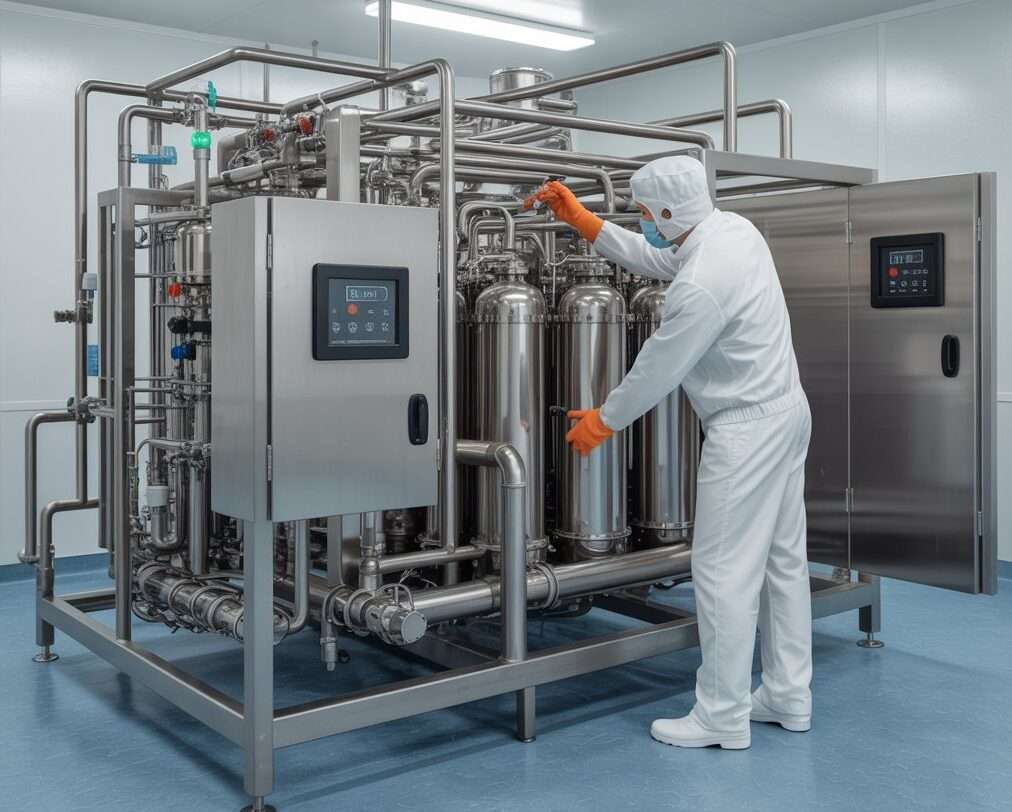
The Maintenance of a Pharmaceutical Water System is one of the most critical responsibilities in pharmaceutical manufacturing. Water is a direct product contact material, and even minor lapses in maintenance can lead to contamination, regulatory observations, or batch failures. A well-maintained Pharmaceutical Water System ensures product quality, patient safety, and uninterrupted regulatory compliance.
Pharmaceutical manufacturers rely on structured maintenance programs, expert Pharma Consultant Services, and validated utility systems to meet WHO-GMP, USFDA, and EU GMP expectations. This guide explains the correct approach to maintaining pharmaceutical water systems, focusing on compliance, risk control, and operational efficiency.
What Is a Pharmaceutical Water System?
A Pharma Water System Consultant is a controlled utility designed to generate, store, and distribute water that meets defined quality standards. These systems supply Purified Water (PW), Water for Injection (WFI), and other grades required for pharmaceutical processes.
Unlike conventional water systems, pharmaceutical water systems must maintain microbiological control, chemical purity, and consistent performance throughout their lifecycle.
Common system components include:
- Pre-treatment units
- Water generation systems
- Storage tanks
- Distribution loops
- Sanitization and monitoring systems
Proper maintenance ensures that every component operates as designed and validated.
Why Maintenance of a Pharmaceutical Water System Is Critical
The Maintenance of a Pharmaceutical Water System directly impacts regulatory compliance and product integrity. Regulators expect documented evidence that water systems remain in a validated state at all times.
Poor maintenance can result in:
- Microbial contamination
- Biofilm formation
- Endotoxin risks
- Audit observations
- Product recalls
Regular maintenance minimizes these risks and supports long-term operational stability.
Types of Pharmaceutical Water and Maintenance Needs
Different water grades require different maintenance approaches.
Purified Water (PW)
Used in formulation, cleaning, and equipment washing. Maintenance focuses on microbial control and conductivity monitoring.
Water for Injection (WFI)
Used in parenteral products. Maintenance emphasizes endotoxin control, continuous circulation, and high-temperature sanitization. Each system must be maintained according to its intended use and regulatory expectations.
Core Elements of Correct Pharmaceutical Water System Maintenance
Preventive Maintenance Planning
Preventive maintenance is the foundation of a compliant water system. Activities should be planned, scheduled, and documented.
Key actions include:
- Routine inspection of pumps and valves
- Filter replacement
- Instrument calibration
- Heat exchanger checks
Preventive maintenance reduces unplanned downtime and contamination risks.
Sanitization and Microbial Control
Sanitization is essential for maintaining microbiological quality. Common sanitization methods:
- Hot water sanitization
- Steam sanitization
- Chemical sanitization
Sanitization frequency should be defined based on system design, usage, and monitoring trends. All activities must be documented and reviewed.
Monitoring and Trending of Water Quality
Continuous monitoring ensures early detection of deviations. Critical parameters include:
- Conductivity
- Total organic carbon
- Microbial count
- Endotoxin levels
Trending data helps identify system deterioration before it becomes a compliance issue. This is a core expectation in audits.
Maintenance of Storage and Distribution Systems
Storage tanks and distribution loops are high-risk areas for contamination.
Best practices include:
- Continuous circulation
- Sloped piping to prevent stagnation
- Regular inspection of spray balls and vents
- Use of sanitary fittings
Proper maintenance prevents biofilm formation and ensures consistent water quality.
Documentation and Change Control
Maintenance activities must be supported by strong documentation.
Required records include:
- Maintenance logs
- Sanitization records
- Deviation reports
- Change control documentation
Any modification to the system must undergo formal change control to maintain validation status.
Role of Pharma Consultant Services in Water System Maintenance
Professional Pharma Consultant Services play a key role in designing, validating, and maintaining pharmaceutical water systems. Consultants help manufacturers align maintenance programs with regulatory expectations and best practices.
Consultant support typically includes:
- Maintenance SOP development
- Risk assessment
- Audit readiness
- Regulatory gap analysis
This expertise ensures long-term system reliability and compliance.
Integration of HVAC and Water Treatment Systems
Pharmaceutical utilities are interconnected. HVAC systems influence temperature, humidity, and microbial control in water generation and storage areas.
Integrated maintenance planning for HVAC and water treatment systems improves overall facility performance. Coordinated utility management reduces cross-contamination risks and supports cleanroom compliance.
Execution Support Through Specialized Water Treatment Providers
While consultants manage design and compliance, execution requires specialized infrastructure expertise. Professional facility solution providers support the implementation and upkeep of water treatment systems.
For pharmaceutical water treatment execution, experienced providers such as Life Pearl Pharma support the manufacturing industry with:
- Water treatment system installation
- Utility execution aligned with consultant-led designs
- Compliance-focused infrastructure support
This collaboration ensures that water systems meet operational and regulatory expectations.
Water Treatment Facility Support by Life Pearl Pharma in Afghanistan
In regions with challenging water infrastructure, reliable water treatment facilities are essential. Life Pearl Pharma supports Water Treatments in Afghanistan by providing facility-level solutions designed for pharmaceutical and healthcare applications.
These water treatment facilities focus on:
- Consistent water quality
- Robust system design for harsh conditions
- Support for pharmaceutical manufacturing and healthcare use
Such facility-driven solutions play a crucial role in maintaining water quality where environmental conditions demand higher reliability.
Common Maintenance Mistakes to Avoid
Many compliance issues arise due to avoidable errors.
Common mistakes include:
- Skipping routine sanitization
- Poor documentation
- Ignoring trend data
- Delayed corrective actions
- Inadequate training
Avoiding these errors strengthens system performance and audit outcomes.
Future-Ready Maintenance Strategies
Modern pharmaceutical facilities adopt proactive strategies such as:
- Risk-based maintenance planning
- Digital monitoring systems
- Predictive maintenance tools
- Consultant-led compliance reviews
These approaches improve reliability and reduce long-term operational costs.
Frequently Asked Questions
1. What is the correct frequency for pharmaceutical water system maintenance?
Maintenance frequency depends on system design, usage, and regulatory requirements. Preventive maintenance schedules should be risk-based and documented.
2. Why is sanitization important in pharmaceutical water systems?
Sanitization prevents microbial growth and biofilm formation, which are major compliance risks in pharmaceutical water systems.
3. How does monitoring support maintenance of a pharmaceutical water system?
Monitoring provides early detection of deviations and supports trend analysis, helping maintain validated system performance.
4. Can pharmaceutical water system maintenance affect regulatory audits?
Yes. Inadequate maintenance records are a common cause of audit observations during GMP inspections.
5. How do pharma consultants support water system maintenance?
Pharma Consultant Services help with SOPs, risk assessments, audit preparation, and ensuring ongoing compliance.
Conclusion
The Maintenance of a Pharmaceutical Water System is not a one-time activity but a continuous, compliance-driven process. Proper maintenance protects product quality, ensures patient safety, and supports regulatory success.
With expert Pharma Consultant Services, structured maintenance programs, and reliable execution partners for water treatment and HVAC systems, pharmaceutical manufacturers can maintain control, reduce risk, and achieve long-term operational excellence.
If you are looking to strengthen the Maintenance of a Pharmaceutical Water System, ensure audit readiness, or improve utility performance, JD Pharma Consultant offers expert consulting support across pharmaceutical engineering, documentation, audits, and plant operations.
Contact JD Pharma Consultant today to build a compliant, reliable, and future-ready pharmaceutical water system.