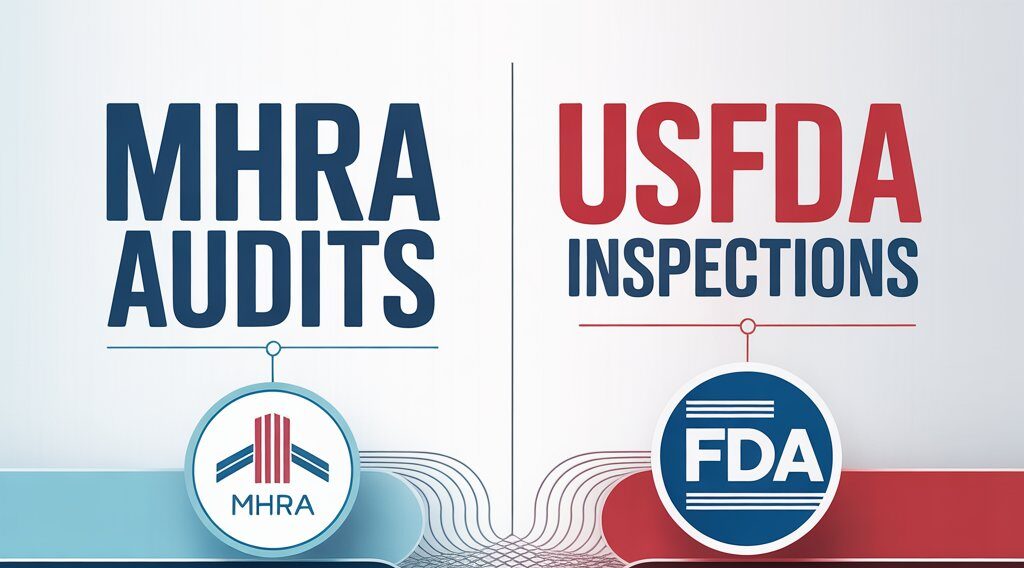
MHRA audits and USFDA inspections differ in approach, scope, documentation, and enforcement. MHRA focuses on risk-based compliance aligned with EU GMP, while USFDA emphasizes data integrity, enforcement actions, and strict regulatory frameworks. Understanding these differences helps pharmaceutical companies ensure global regulatory compliance and avoid penalties.
Both regulatory bodies play a critical role in ensuring drug safety and quality. However, their inspection styles, expectations, and enforcement strategies vary significantly. For businesses working with pharma regulatory consultants, understanding these differences is crucial to maintaining compliance and avoiding costly delays. This guide will help you clearly understand both systems in a simple and practical way.
What is MHRA and USFDA?
Before diving into how MHRA Audits Differ from USFDA Inspections, it is important to understand these authorities.
- MHRA (Medicines and Healthcare products Regulatory Agency) is the UK regulatory body responsible for ensuring medicines and medical devices are safe and effective.
- USFDA (United States Food and Drug Administration) regulates pharmaceuticals, biologics, and medical devices in the United States.
Both organizations follow strict regulatory frameworks but differ in implementation. Many companies rely on pharmaceutical regulatory affairs consultancy services to align with both authorities.
How MHRA Audits Differ from USFDA Inspections in Approach
MHRA Approach
MHRA follows a risk-based inspection model.
- Focuses on patient safety and product quality
- Evaluates overall quality systems
- Encourages collaborative interaction
- Often aligned with EU GMP standards
USFDA Approach
USFDA inspections are more compliance-driven and enforcement-focused.
- Strong emphasis on data integrity
- Detailed documentation review
- Strict adherence to regulations
- Higher likelihood of enforcement actions
Companies seeking Global Regulatory Compliance Services often prepare differently for these inspections due to these variations.
How MHRA Audits Differ from USFDA Inspections in Documentation
Documentation plays a major role in both audits, but expectations differ.
MHRA Documentation Expectations
- Focus on completeness and clarity
- Emphasis on quality management systems
- Accepts structured and logical documentation
USFDA Documentation Expectations
- Requires detailed and traceable records
- Strong focus on raw data and audit trails
- Zero tolerance for missing or manipulated data
For this reason, pharmaceutical compliance consulting experts often recommend stronger documentation systems for USFDA readiness.
How MHRA Audits Differ from USFDA Inspections in Inspection Style
Inspection style is one of the most noticeable differences.
MHRA Inspection Style
- Interactive and discussion-based
- Inspectors may guide improvements
- Focus on understanding processes
USFDA Inspection Style
- Formal and structured
- Investigative in nature
- Focus on identifying violations
This difference is why companies often engage top pharma regulatory consulting firms to prepare for USFDA inspections more rigorously.
Key Differences Table
| Aspect | MHRA Audit | USFDA Inspection |
| Approach | Risk-based | Compliance-driven |
| Style | Collaborative | Investigative |
| Documentation | System-focused | Data-focused |
| Enforcement | Moderate | Strict |
| Focus | Quality systems | Data integrity |
| Outcome | Improvement guidance | Warning letters or penalties |
How MHRA Audits Differ from USFDA Inspections in Compliance Requirements
MHRA Compliance
MHRA focuses on adherence to Good Manufacturing Practice (GMP) aligned with European standards.
- Quality risk management
- Continuous improvement
- Process understanding
USFDA Compliance
USFDA requires strict compliance with 21 CFR regulations.
- Data integrity compliance
- Electronic record controls
- Validation requirements
Companies offering pharmaceutical regulatory affairs consultancy services often help bridge these regulatory gaps.
Enforcement Actions and Outcomes
MHRA Outcomes
- Observations and recommendations
- Improvement notices
- Rare severe penalties
USFDA Outcomes
- Form 483 observations
- Warning letters
- Import alerts and product bans
This makes USFDA inspections more critical from a business risk perspective.
Preparation Strategies for Pharma Companies
To manage how MHRA Audits Differ from USFDA Inspections, companies must adopt tailored strategies.
For MHRA Audits
- Focus on quality systems
- Maintain GMP compliance
- Train staff on process understanding
For USFDA Inspections
- Ensure data integrity systems
- Maintain audit trails
- Conduct mock inspections
Working with pharma regulatory consultants can significantly improve audit readiness.
Role of Regulatory Consultants
Regulatory consultants play a crucial role in global compliance.
Key Benefits
- Gap analysis for both MHRA and USFDA
- Documentation and SOP development
- Audit preparation and mock inspections
- Training for staff
Companies offering Global Regulatory Compliance Services help businesses align with international standards efficiently.
Common Challenges Faced by Pharma Companies
Understanding how MHRA Audits Differ from USFDA Inspections helps overcome key challenges.
Major Issues
- Lack of data integrity systems
- Poor documentation practices
- Inadequate staff training
- Non-compliance with global standards
With proper pharmaceutical compliance consulting, these challenges can be minimized.
Best Practices for Dual Compliance
Companies operating globally must meet both standards.
Recommended Practices
- Implement robust Quality Management Systems
- Use digital tools for data tracking
- Conduct regular internal audits
- Stay updated with regulatory changes
Partnering with top pharma regulatory consulting firms ensures long-term compliance success.
FAQs About How MHRA Audits Differ from USFDA Inspections
1. What is the main difference between MHRA and USFDA inspections?
The main difference is that MHRA follows a risk-based approach, while USFDA focuses on strict compliance and data integrity.
2. Which inspection is more stringent, MHRA or USFDA?
USFDA inspections are generally considered more stringent due to strict enforcement and detailed data review.
3. How can companies prepare for both inspections?
Companies should implement strong quality systems, maintain accurate documentation, and conduct mock audits with pharma regulatory consultants.
4. Do MHRA and USFDA follow the same GMP guidelines?
Both follow GMP principles, but MHRA aligns with EU GMP, while USFDA follows 21 CFR regulations.
5. Why is regulatory consulting important?
Regulatory consulting ensures compliance, reduces risks, and improves success rates during inspections through expert guidance.
Conclusion
Understanding how MHRA Audits Differ from USFDA Inspections is essential for pharmaceutical companies aiming for global market access.
While MHRA focuses on risk-based quality systems, USFDA emphasizes strict compliance and data integrity. Both require careful preparation, strong documentation, and expert guidance.
Businesses that invest in pharmaceutical regulatory affairs consultancy gain a competitive advantage by ensuring smooth inspections and faster approvals.Looking to prepare for MHRA or USFDA inspections? JD Pharma Consultants offers expert pharma regulatory consultants, Global Regulatory Compliance Services, and complete pharmaceutical compliance consulting solutions tailored to your needs. Contact us today to ensure your facility is inspection-ready and globally compliant.