JD Pharma Consultants PVT. LTD

Author name: info@jdpharmaconsultants.co.in

Uncategorized

How PMEC India 2025 Is Accelerating India’s Position in Global Pharma Tech

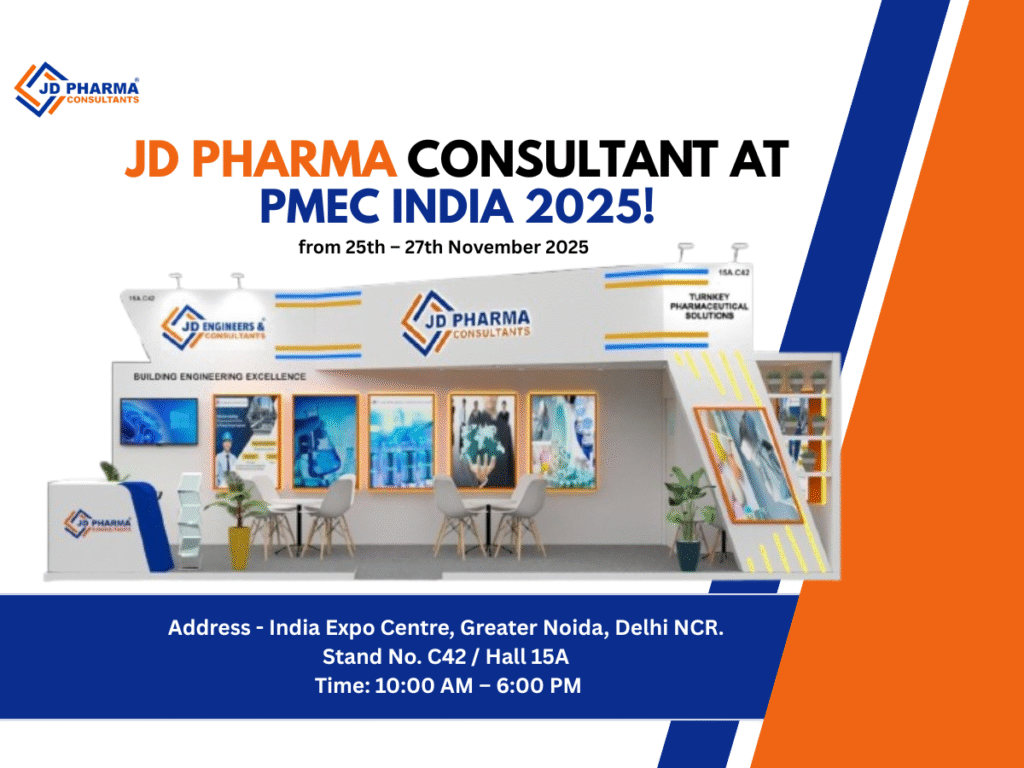
PMEC India 2025 is set to reshape the future of pharmaceutical technology by bringing together world-class innovators, manufacturing experts, equipment suppliers, automation leaders, and pharma engineering consultants on one massive global platform. As India continues rising as the world’s pharma powerhouse, events like PMEC India 2025 play a crucial role in accelerating innovation, improving compliance, and strengthening India’s position in global pharma tech. This blog explains exactly how PMEC India 2025 is driving India’s global leadership, what new opportunities it opens for pharma professionals, and why attending this year’s exhibition is essential for manufacturers, investors, consultants, and emerging companies. And yes — if you’re planning to visit, meet JD Pharma Consultant at: Stand No. C42 / Hall 15A25th – 27th November 2025India Expo Centre, Greater Noida, Delhi NCR10:00 AM – 6:00 PM Visitors will get a chance to experience cutting-edge innovations in pharma machinery, packaging technologies, API production systems, laboratory solutions, cleanroom design, HVAC, automation, engineering, and pharmaceutical turnkey consultancy solutions all under one roof. Why Is PMEC India 2025 Important for India’s Pharma Tech Growth? PMEC India is Asia’s biggest pharmaceutical equipment and technology event. In 2025, it is expected to surpass previous editions in scale, global participation, and the range of solutions presented. Here’s why it matters: What Makes PMEC India 2025 a Game Changer for Global Pharma Technology? PMEC India 2025 is not just a trade show — it is a platform where technology adoption, global partnerships, and regulatory advancements evolve together. Here’s how the event is accelerating India’s global pharma tech position. How Does PMEC India 2025 Strengthen India’s Pharma Manufacturing Excellence? 1. Introduction of High-End, Automated Machinery Manufacturers can explore world-class machinery for: Automation and robotics showcased here help Indian manufacturers achieve: 2. Faster Digital Transformation in Pharma Expect cutting-edge digital innovations: These technologies reduce operational costs and enhance regulatory compliance. 3. Stronger Focus on Global Regulatory Standards India is rapidly strengthening compliance to match global needs. PMEC 2025 will offer: This ensures Indian plants can meet USFDA, MHRA, TGA, and EMA requirements more easily. What New Opportunities Will PMEC India 2025 Offer to the Pharma Industry? 1. Global Networking With 1,500+ Exhibitors PMEC India attracts exhibitors from 100+ countries. This means: 2. Collaboration With Industry Leaders Top pharmaceutical manufacturing and engineering companies participate with live demonstrations, product launches, and R&D showcases. 3. Insights Into Future Pharma Trends Emerging trends you’ll witness at PMEC 2025 include: These innovations are crucial in maintaining India’s global competitive edge. How Is PMEC India Supporting India’s Goal of Becoming a Global Pharma Tech Hub? 1. Advancing Pharmaceutical Engineering & Layout Design The event showcases the future of facility engineering: These innovations help India build world-class facilities faster and more cost-effectively. 2. Empowering Local Manufacturers Startups, MSMEs, and mid-scale manufacturers benefit through: 3. Promoting India as a Trusted Global Supply Partner PMEC India enhances India’s pharma export capabilities by showcasing: This strengthens India’s image as a reliable global supplier. What Will Visitors Experience at JD Pharma Consultant’s Booth at PMEC India 2025? JD Pharma Consultant brings deep expertise in: At our booth (Stand No. C42 / Hall 15A), visitors will experience: Why Visit Us? Because JD Pharma Consultant helps solve real challenges: Our solutions help pharma companies achieve faster approvals, smoother audits, efficient operations, and long-term savings. What Are the Key Benefits of Attending PMEC India 2025? ✔ Learn the Latest Industry Trends ✔ Connect With Top Global Manufacturers ✔ Explore Ready-to-Implement Machinery ✔ Experience Live Technical Demonstrations ✔ Discover Automation & Digital Pharma Solutions ✔ Attend Knowledge Sessions & Workshops ✔ Grow Business With Global Buyers ✔ Meet Industry-Leading Consultants & Engineers PMEC India is the most important annual event for anyone serious about future-ready pharma operations. FAQs About Q1: What is the main purpose of PMEC India 2025? To bring global pharma machinery, technology innovators, and engineering experts together to accelerate India’s growth in pharmaceutical manufacturing and compliance. Q2: Who should attend PMEC India 2025? Pharma manufacturers, engineers, QA professionals, R&D teams, consultants, machinery suppliers, investors, and startups. Q3: How is PMEC India useful for pharma startups? Startups can explore cost-efficient technology, network with suppliers, get guidance from consultants, and identify scalable solutions. Q4: What technologies will be showcased at PMEC India 2025? Automation, aseptic equipment, packaging lines, cleanroom systems, HVAC, lab instruments, API production technologies, robotics, MES, and digital pharma solutions. Q5: Where is JD Pharma Consultant located during PMEC India 2025? Stand No. C42 / Hall 15A, India Expo Centre, Greater Noida, Delhi NCR. Key Takeaways  Join Us at PMEC India 2025 If you’re planning to upgrade your pharmaceutical facility, build a new plant, or need expert consultancy for GMP compliance or turnkey projects — visit JD Pharma Consultant at PMEC India 2025. Stand No. C42 / Hall 15A25th – 27th November 2025India Expo Centre, Greater Noida, Delhi NCR Let’s discuss how we can design, build, and optimize your pharma project with world-class engineering and regulatory excellence.


pharmaceutical plant design consultants
Uncategorized

Top Strategies to Enhance Productivity in Pharma Plant Operations

In today’s fast-paced pharmaceutical industry, enhancing productivity isn’t optional  it’s vital for growth, compliance, and competitiveness. Whether you’re designing a new facility or optimising an existing one, partnering with expert pharmaceutical plant design consultants and focusing on smart operations can significantly boost efficiency and output. At JD Pharma Consultant, one of the leading Pharma Consultancy Companies in India, we help pharmaceutical manufacturers enhance their operational efficiency through strategic planning, plant design optimisation, and implementation of global best practices. Optimize the Layout of Pharmaceutical Manufacturing Plant The layout of pharmaceutical manufacturing plant plays a critical role in achieving operational efficiency. A well-structured pharmaceutical manufacturing plant layout design ensures smooth material flow, prevents cross-contamination, and reduces unnecessary movement of personnel and materials. Best practices for effective plant layout design: A professional pharmaceutical plant design consultant can assess your process flow and create a layout that balances efficiency, compliance, and scalability ensuring every square foot contributes to productivity. Embrace Digital Transformation and Automation Digitalisation is revolutionising pharma manufacturing. By automating manual processes and integrating smart systems, plants can significantly increase throughput and accuracy. Automation strategies to improve productivity: Automation not only improves operational speed but also enhances compliance by ensuring data integrity a critical factor for WHO-GMP and USFDA approvals. Implement Total Productive Maintenance (TPM) Practices Equipment downtime is a hidden productivity killer. Adopting Total Productive Maintenance (TPM) ensures that every machine operates at its best performance level. Key TPM principles: A TPM-driven culture encourages ownership, reduces breakdown frequency, and sustains long-term operational reliability. Empower Your Workforce Through Training and Engagement No matter how advanced your facility is, productivity depends on your people. A motivated and skilled workforce ensures consistent performance and quality output. Ways to build a high-performance team: When employees understand their role in operational excellence, engagement and efficiency rise naturally. Monitor Key Performance Indicators (KPIs) Regularly What gets measured gets improved. KPIs in the pharmaceutical industry provide actionable insights into productivity and quality. Essential KPIs for pharma plants: Tracking these metrics through real-time dashboards helps identify bottlenecks and improve decision-making at all operational levels. Prioritize Quality and Compliance for Long-Term Efficiency Productivity and compliance go hand in hand. Ignoring quality leads to reworks, delays, and regulatory issues  all of which hurt productivity. Quality-focused productivity improvements: Partnering with pharmaceutical plant design consultants ensures your facility’s design supports both GMP and productivity objectives. Streamline Changeovers for Multi-Product Efficiency Modern plants often handle multiple products and frequent changeovers. Reducing downtime during changeovers can significantly improve equipment utilisation. Changeover optimization tips: Efficient changeovers mean more batches, less idle time, and higher ROI from your facility investments. Use Data Analytics to Drive Smart Decisions Data is the new productivity engine. Advanced analytics allow you to detect inefficiencies and continuously refine processes. Smart data applications: By combining analytics with expert insights from a Pharma Consultancy Company in India, you can make informed, data-driven improvements that compound over time. Adopt Continuous Improvement and Lean Manufacturing Lean manufacturing and continuous improvement eliminate non-value-adding activities, ensuring every process step contributes to the final goal. Core lean practices for pharma operations: These practices foster a culture of efficiency and innovation the hallmark of world-class pharma plants. Collaborate with Expert Pharmaceutical Plant Design Consultants To achieve long-term productivity, you need more than just internal efforts you need external expertise. Professional pharmaceutical plant design consultants combine technical, regulatory, and operational insights to transform your facility’s performance. Why work with JD Pharma Consultant: By choosing JD Pharma Consultant, you ensure your plant is designed for maximum efficiency, safety, and compliance  from layout to live production. FAQs About pharmaceutical plant design consultant 1. What measures were implemented to improve productivity in the factory? To improve productivity, factories optimize plant layout, automate production processes, adopt TPM practices, train staff, and track KPIs such as OEE and yield. Implementing lean manufacturing and predictive maintenance also minimizes downtime and waste. 2. What is KPI in pharmaceutical industry? A KPI (Key Performance Indicator) measures performance in critical areas such as equipment efficiency, cycle time, yield, and quality compliance. These metrics help management track progress, identify inefficiencies, and drive continuous improvement in pharma operations. 3. What is TPM in pharma industry? TPM (Total Productive Maintenance) is a proactive maintenance system that involves all employees in maintaining equipment efficiency. It focuses on reducing breakdowns, improving uptime, and sustaining high performance through preventive maintenance and operator involvement. Conclusion Boosting productivity in pharmaceutical plant operations demands a strategic blend of efficient design, advanced technology, skilled manpower, and continuous improvement. By working with seasoned pharmaceutical plant design consultants like JD Pharma Consultant, you can build or optimize a facility that meets global compliance standards while delivering maximum efficiency.

Pharmaceutical Facility Audit
Uncategorized

Why Documentation and Audit Go Hand in Hand for Global Pharma Compliance

In the modern pharmaceutical world, documentation and audit are the backbone of global compliance. They are not separate functions but two sides of the same coinensuring transparency, traceability, and trust in every stage of drug manufacturing. Whether it’s a Pharmaceutical Facility Audit, a USFDA Compliance Audit in India, or a GMP Compliance Audit Service, both documentation and audit play a decisive role in maintaining international quality standards. A strong documentation system makes audits meaningful. Without it, compliance becomes guesswork. Let’s explore how these two processes reinforce each other and why integrating them is vital for achieving global pharmaceutical excellence. The Role of Documentation in Pharma Compliance In pharmaceuticals, every process must be proven and documentation is that proof. From raw material testing to batch release, every activity must be recorded, reviewed, and stored securely. Key types of documentation include: Good documentation ensures that pharmaceutical companies can: Without solid documentation, even the most advanced plant cannot prove compliance with global standards. How Audits Depend on Documentation for Verification An audit validates that your documented systems are working as intended. Whether it’s a Pharmaceutical Facility Audit or a USFDA Compliance Audit in India, the auditor’s primary tool is your documentation. During an audit, documentation provides: Auditors often say, “If it’s not documented, it didn’t happen.” This highlights how vital documentation is to proving compliance. A good documentation system enables smooth audits, faster approvals, and reduced risk of non-compliance findings. Why Documentation and Audit Must Work Together for Global Compliance Pharmaceutical companies today operate in a complex, globally regulated environment. Facilities in India often supply products to the USA, Europe, or other strict regulatory markets. Each region expects consistent documentation and audit readiness. Here’s why the link matters globally: When documentation and audit function hand-in-hand, pharmaceutical companies achieve predictable quality, regulatory confidence, and global market access. Elements of Documentation Required for a Pharmaceutical Facility Audit To prepare for a pharmaceutical facility audit, the following documents are essential: 1. Quality Management System (QMS) Documents 2. Manufacturing Documentation 3. Facility and Equipment Documentation 4. Personnel Documentation 5. Computer System Documentation Having these records up-to-date, approved, and accessible ensures that any auditor internal, external, or regulatory can verify compliance quickly. Best Practices for Aligning Documentation and Audits To maintain global compliance, companies should harmonize their documentation and audit processes. Here’s how: 1. Establish Document Control SystemsUse version control and approval workflows to ensure all documents are current and accurate. 2. Conduct Regular Internal Audits Internal audits verify that documentation aligns with actual practices, reducing surprises during regulatory audits. 3. Train Employees ContinuouslyEnsure that everyone understands the importance of accurate documentation and audit readiness. 4. Integrate Audit Findings with Documentation UpdatesWhen an audit identifies a gap, update SOPs or training materials immediately. 5. Implement Electronic Document Management Systems (EDMS)Digital solutions improve traceability, access control, and data integrity. 6. Schedule Mock AuditsSimulated audits help identify weak spots before a real inspection occurs. 7. Engage GMP Compliance Audit ServicesThird-party experts can help align your documentation and audit processes with USFDA or WHO-GMP expectations. By following these best practices, companies can move from reactive compliance to proactive quality excellence. The Role of Third-Party Audits in Strengthening Documentation While internal audits are valuable, third-party audits company add an external layer of assurance. They provide an independent assessment of documentation accuracy and compliance levels. Advantages include: A pharma audit report of a company prepared by an independent auditor also enhances trust with clients and regulators. The Impact of USFDA Compliance Audits in India India is one of the world’s largest exporters of pharmaceuticals, making USFDA Compliance Audits a critical component of success. To pass these audits, documentation must: USFDA Compliance Audit India specialists often perform pre-audit documentation reviews to identify gaps before official inspections. Proper documentation not only reduces risk but also enhances the credibility of Indian facilities in the global market. Benefits of Integrating Documentation and Audit Systems When both processes work together, the benefits multiply: In essence, a strong documentation-audit link transforms compliance from a burden into a competitive advantage. How GMP Compliance Audit Services Support Global Standards GMP Compliance Audit Services help pharmaceutical companies meet strict manufacturing and quality standards set by regulators like the USFDA, EMA, and WHO. These services include: Partnering with expert auditors ensures that your pharmaceutical facility audit meets international expectations and builds long-term compliance resilience. Common Pitfalls and How to Avoid Them Even experienced companies make mistakes that weaken audit outcomes. Avoid these common pitfalls: FAQs About Pharmaceutical Facility Audit 1. Do they audit small companies as well? Yes. Regulatory authorities and third-party auditors assess both small and large firms. Even smaller manufacturers must comply with GMP and maintain proper documentation. In fact, smaller setups can benefit greatly from regular audits to strengthen their quality systems. 2. What Are the Benefits of Hiring a Third-Party Auditor? Hiring a third-party auditor offers independence, experience, and credibility. They can identify documentation gaps, simulate regulatory audits, and guide you toward global compliance. Their impartial reports often carry more weight with customers and regulators. 3. What Is the Benefit of Using a Third-Party Auditor Over an Internal Auditor? A third-party auditor provides an external, unbiased perspective. Unlike internal teams, they can benchmark your facility against international standards and identify hidden risks. They also help ensure your documentation meets the expectations of global regulatory authorities. Conclusion  In global pharmaceuticals, compliance isn’t a one-time event it’s a continuous cycle of documentation, verification, and improvement. When documentation accurately reflects reality, and audits continuously validate and refine it, companies build credibility, ensure patient safety, and gain faster regulatory approvals. Whether it’s a Pharmaceutical Facility Audit, USFDA Compliance Audit India, or GMP Compliance Audit Service, the harmony between documentation and audit defines success in global pharma compliance.

Uncategorized

What Is Documentation Process in Pharmaceutical Industry?

In the pharmaceutical industry, every batch, process, and material must be accurately recorded — not only for regulatory compliance but also to ensure patient safety. If you’ve ever wondered “Why is documentation so important in pharma?” or “How does the documentation process actually work?”, you’re not alone. Many pharma professionals, QA teams, and business owners struggle with managing documentation efficiently and maintaining consistent GMP practices. This detailed guide by JD Pharma Consultant, a leading Pharma Consultancy Company, breaks down the complete documentation process in the pharmaceutical industry. You’ll learn how companies maintain GMP compliance, meet WHO-GMP and USFDA requirements, and ensure smooth day-to-day operations. Whether you’re setting up a new pharma facility or upgrading your existing documentation system, this blog will give you clarity, confidence, and practical steps to follow. The documentation process in the pharmaceutical industry refers to the systematic creation, review, approval, distribution, control, and storage of all records that define procedures and monitor quality. These documents ensure traceability, compliance, accountability, and product safety according to global guidelines such as GMP, WHO-GMP, and USFDA standards. Why Is Documentation Important in the Pharmaceutical Industry?  What makes documentation so critical in pharma? Documentation is the backbone of any pharmaceutical manufacturing operation. It ensures that: Without a documentation system, no pharmaceutical company can survive a GMP audit, let alone produce a compliant product. Types of Documentation in the Pharmaceutical Industry 1. What are the main document categories under GMP?  Pharmaceutical documentation is broadly divided into: 1. Quality Documents 2. Production Documents 3. Regulatory Documents 4. Safety & Compliance Documents These documents form a complete ecosystem that keeps the entire facility compliant, auditable, and consistent. What Is the Documentation Process in Pharma? Step-by-Step How does a document move from draft to approval? Here is the complete process followed across GMP-compliant pharmaceutical facilities: 1. Document Preparation Documents are drafted by subject-matter experts (SMEs), such as: During drafting: A good document must be accurate, clear, and aligned with GMP expectations. 2. Review and Verification After drafting, documents are reviewed by the QA team to check: This step ensures ZERO mistakes before approval. 3. Approval and Authorization The document is approved by: Once approved, the document receives: This prevents confusion and ensures proper tracking. 4. Distribution and Training Before implementation: This ensures the team understands the updated steps and follows them correctly. 5. Implementation The approved document is now part of daily operations. Operators follow the instructions exactly as written, ensuring: 6. Periodic Review and Updates Documents must be reviewed: This ensures the system stays up-to-date and audit-ready. What Are the Key Documents Required in a WHO-GMP Facility? If you want WHO-GMP certification, documentation must be comprehensive. Common documents include: WHO auditors focus heavily on completeness, version control, and traceability. What Documents Are Required for USFDA Compliance? USFDA requires highly detailed records. Key components include: USFDA inspections are strict, so documentation must be accurate, real-time, and tamper-proof. How to Maintain Good Documentation Practices (GDP) in Pharma? What are the rules for good documentation? Key GDP Rules How Pharma Consultancy Companies Help with Documentation Many organizations struggle with documentation, especially during audits. A Pharma Consultancy Company , like JD Pharma Consultant, assists with: Their expertise ensures companies stay compliant and audit-ready.  FAQs about Documentation Process in Pharmaceutical Industry 1. What is documentation in pharmaceutical industry? It is the systematic recording of processes, procedures, data, and activities to comply with GMP standards. 2. What documents are required for GMP? SOPs, quality manuals, validation documents, BMR/BPR, calibration logs, and audit reports. 3. Who is responsible for documentation in pharma? Primarily the Quality Assurance (QA) department, along with Production and R&D teams. 4. Why GMP documentation is important? Because it ensures compliance, quality, product safety, and traceability. 5. What is the difference between WHO-GMP and USFDA documentation? WHO-GMP focuses on global quality guidelines; USFDA requires more detailed and highly regulated documentation. Key Takeaways  If you want to upgrade your documentation system, achieve WHO-GMP or USFDA compliance, or set up a new pharma plant, JD Pharma Consultant can help you with complete, audit-ready documentation and technical support. Contact JD Pharma Consultant today to streamline your entire documentation process and stay 100% compliant.

Pharmaceutical Engineering Services
Uncategorized

How pharmaceutical engineering services shape the future of modern drug manufacturing

The pharmaceutical industry is evolving faster than ever before. With global regulatory demands, advanced technologies, and increasing competition, the need for pharmaceutical engineering services has become essential for every forward-thinking drug manufacturer. At JD Pharma Consultant, a leading Pharma Consultancy Company in India, we believe engineering excellence is the foundation of innovation in pharma. From conceptual design to plant commissioning, pharmaceutical engineering defines how safe, efficient, and scalable modern drug manufacturing can be. The Changing Face of Drug Manufacturing Gone are the days when pharmaceutical plants operated with rigid, manual systems. Today, facilities must be intelligent, digital, and compliant with global GMP standards. Pharmaceutical engineering services combine design, technology, and compliance to help companies produce drugs more efficiently and safely. Modern pharmaceutical manufacturing relies on: These advancements make it possible for manufacturers to meet the ever-growing demand for high-quality medicines while maintaining profitability. What Are Pharmaceutical Engineering Services? Pharmaceutical engineering services refer to the specialized planning, design, and management of manufacturing facilities used to produce pharmaceutical products. They cover every technical and compliance aspect of drug manufacturing, including: Essentially, these services bridge the gap between scientific innovation and commercial production ensuring medicines are produced under strict regulatory and quality standards. Role of Pharmaceutical Engineering in Modern Manufacturing Pharmaceutical engineers are the architects of modern medicine production. Their goal is to create facilities that deliver: Efficiency: Smart layouts reduce movement, time, and waste.Compliance: Every process meets WHO, US FDA, and EU GMP standards.Flexibility: Plants are built to handle multiple formulations.Sustainability: Energy and waste reduction are integrated from the design stage. At JD Pharma Consultant, our expert engineers design plants that not only meet current requirements but also anticipate future regulations and technologies. Core Areas of Pharmaceutical Engineering Services To stay ahead, engineering services cover several critical domains: 1. Facility Layout & Plant Design A well-designed pharmaceutical manufacturing plant layout is the backbone of efficiency. It defines product flow, clean zones, material movement, and contamination control. 2. Process & Utility Engineering Designing clean utilities such as Water for Injection (WFI), HVAC, and compressed air is key to maintaining GMP conditions. 3. Automation & Control Modern plants adopt PLC, SCADA, and IoT-based automation systems for real-time data monitoring and batch traceability. 4. Validation & Qualification Pharmaceutical engineering services include complete validation from design qualification (DQ) to performance qualification (PQ) ensuring your plant is audit-ready. 5. Regulatory Compliance Engineering aligns with standards such as US FDA, WHO-GMP, MHRA, and EU GMP, making your plant globally competitive. Why India Leads in Pharmaceutical Engineering Services India has emerged as a global hub for pharmaceutical manufacturing, exporting medicines to over 200 countries. Partnering with a Pharma Consultancy Company in India provides: Indian consultants, like JD Pharma Consultant, combine deep technical skills with a clear understanding of global compliance, making them the preferred choice for turnkey pharma projects worldwide. How Pharmaceutical Engineering Services Shape the Future Here’s how these services are transforming modern drug manufacturing: 1. Digital Transformation With the rise of Pharma 4.0, digital twins, AI, and predictive analytics are redefining plant operations. Engineering services now integrate IoT devices, real-time data systems, and digital validation platforms for smarter production. 2. Sustainable Manufacturing Green engineering practices like renewable energy systems and waste reduction are now essential. Sustainable design ensures both regulatory compliance and long-term profitability. 3. Personalized Medicine As the world moves toward precision medicine, pharmaceutical engineering helps create adaptable facilities capable of producing small, specialized batches efficiently. 4. Faster Time-to-Market Using advanced simulation, modular construction, and agile project management, modern engineering solutions reduce the timeline from concept to commercial production. 5. Global Compliance and Quality Engineering services embed compliance into every design layer, ensuring plants are audit-ready for US FDA, WHO-GMP, and EU GMP inspections. The Role of Project Management in Pharmaceutical Industry Behind every successful engineering project lies strong project management. In the pharmaceutical industry, project management ensures: JD Pharma Consultant integrates project management in pharmaceutical industry practices with engineering excellence, ensuring on-time and within-budget project delivery. The Benefits of Partnering with Pharmaceutical Manufacturing Consultants Collaborating with expert pharmaceutical manufacturing consultants ensures you receive: Our holistic approach transforms your vision into a fully compliant, world-class facility. Future Trends in Pharmaceutical Engineering The next decade will redefine drug manufacturing. Expect to see: These advancements will make pharmaceutical manufacturing more adaptive, efficient, and sustainable driven entirely by smart engineering solutions. FAQs About Pharmaceutical engineering services 1. What are Pharmaceutical Engineering Services? Pharmaceutical engineering services involve designing, validating, and optimizing facilities that manufacture medicines. They include plant layout, utility design, automation, validation, and compliance support to ensure consistent quality and efficiency. 2. What regulatory standards do you comply with? At JD Pharma Consultant, we follow global standards such as WHO-GMP, US FDA, EU GMP, and ISO 9001. Every facility design and validation aligns with international regulatory expectations. 3. Do you provide support for facility upgrades or expansions? Yes, we specialize in plant modernization, capacity expansion, and technology upgradation. Our team ensures minimal disruption and maximum compliance during every expansion project. Why Choose JD Pharma Consultant As one of the Top Pharma Consultancy Companies in India, JD Pharma Consultant provides end-to-end pharmaceutical engineering services—from feasibility studies to turnkey plant setup. Our expertise includes: With decades of experience, we deliver reliable, compliant, and future-ready facilities for pharmaceutical manufacturers across the globe. Conclusion Pharmaceutical engineering is the backbone of innovation and efficiency in modern drug manufacturing. As the industry faces tighter regulations, complex therapies, and digital transformation, pharmaceutical engineering services will continue to define how drugs are designed, produced, and delivered. Whether it’s a new facility or an upgrade to an existing one, expert engineering ensures compliance, efficiency, and sustainability all while meeting market demands faster.

Turnkey Pharmaceutical Projects
Uncategorized

How Turnkey Project Consultants Simplify Pharma Plant Setup and Regulatory Approvals

Setting up a pharmaceutical plant can be a complex, time-intensive, and highly regulated process. From planning the facility layout to obtaining multiple regulatory approvals, every stage demands precision and expertise. That’s where Turnkey Project Consultants in India come in. They manage everything from concept to commissioning  providing pharmaceutical turnkey solutions that streamline plant setup and regulatory clearances. Whether you’re launching a new facility or upgrading an existing one, pharma turnkey project consultants in India ensure your project is compliant, efficient, and ready for production. Understanding Turnkey Pharmaceutical Projects A turnkey pharmaceutical project is an end-to-end service solution where the consultant handles all aspects of your plant setup  from design and construction to regulatory approval and commissioning. The term “turnkey” means you receive a fully operational, compliant plant  ready to “turn the key” and start manufacturing. Unlike fragmented project management, where multiple contractors handle separate phases, turnkey pharmaceutical projects eliminate coordination challenges and ensure a seamless, compliant execution. Why Turnkey Project Consultants Are Essential in Pharma Pharmaceutical manufacturing is among the most regulated industries in the world. Delays or compliance lapses can lead to serious setbacks. Turnkey project consultants in India specialize in simplifying the process by: Their holistic approach minimizes risk while maximizing productivity and quality. 1. Strategic Planning and Feasibility Analysis The first step in a successful turnkey pharmaceutical project is proper planning. Consultants begin with detailed feasibility studies and project definition to align technical, regulatory, and financial goals. Key planning activities include: This initial groundwork ensures your pharma project is realistic, compliant, and future-ready. 2. GMP-Compliant Plant Design and Layout Design is the foundation of compliance. Pharma turnkey project consultants in India develop plant layouts that meet WHO-GMP and USFDA standards while optimizing workflow and safety. Design features include: A well-designed layout not only meets regulatory requirements but also enhances productivity, reduces wastage, and ensures long-term operational efficiency. 3. Engineering, Procurement, and Construction (EPC) Once designs are approved, the consultant moves to Engineering, Procurement, and Construction (EPC)  the execution phase. This includes: With a pharmaceutical turnkey solutions partner managing these operations, companies avoid coordination errors, cost overruns, and project delays. 4. Equipment Installation and Validation After installation, every machine and system must undergo rigorous validation before production begins. Turnkey project consultants manage: Consultants also prepare detailed validation documents, ensuring all processes are compliant and audit-ready. 5. Regulatory Documentation and Approvals One of the biggest challenges in pharma setup is navigating regulatory approvals. Experienced Turnkey Project Consultants in India make this step hassle-free. They assist with: Their regulatory insight ensures faster, smoother approvals  a major advantage for companies seeking quick market entry. 6. Training and Commissioning A true turnkey pharmaceutical project doesn’t end with construction. Consultants provide on-site training to operators and quality teams, ensuring everyone understands the systems, SOPs, and compliance guidelines. Once validated, the plant is handed over as a fully operational, compliant facility  ready for commercial production. 7. Post-Project Support and Continuous Improvement After handover, leading pharma turnkey project consultants in India offer ongoing technical and compliance support. This includes: Continuous support ensures the plant remains compliant and efficient long after commissioning. Benefits of Choosing Pharmaceutical Turnkey Solutions Partnering with a turnkey consultant offers significant operational and financial advantages: Time Efficiency – Faster completion by avoiding multi-vendor delays.Cost Control – Fixed-price contracts and optimized procurement reduce overruns.Compliance Assurance – Built-in adherence to GMP, USFDA, and WHO standards.Single-Point Responsibility – One accountable partner from concept to commissioning.High Quality & Reliability – Standardized validation and documentation ensure audit readiness. These benefits make turnkey execution the preferred model for pharma entrepreneurs and global exporters alike. How Turnkey Project Consultants Simplify Regulatory Approvals Regulatory approval is often the toughest phase in pharma plant setup. Turnkey experts simplify this through their deep understanding of compliance frameworks: With a turnkey approach, your facility reaches “regulatory readiness” much faster, cutting down months of documentation delays. India’s Edge in Turnkey Pharma Projects India has become a global hub for turnkey pharmaceutical projects due to its skilled workforce, engineering excellence, and cost-effective manufacturing ecosystem. Why India is leading: That’s why global pharmaceutical firms increasingly partner with Turnkey Project Consultants in India for greenfield and brownfield projects. Selecting the Right Turnkey Partner Before you finalize your consultant, assess these parameters: A reliable partner like JD Pharma Consultants combines technical knowledge, regulatory insight, and execution discipline  ensuring your project is completed on time and within budget. Why JD Pharma Consultants Is a Trusted Turnkey Partner JD Pharma Consultants is one of the top pharma turnkey project consultants in India, offering comprehensive pharmaceutical turnkey solutions for formulation, API, and biotech facilities. Our expertise includes: We combine innovation, compliance, and execution excellence to deliver plants that meet global standards  empowering your pharma business to grow faster and safer. FAQs About turnkey pharmaceutical project  1. What is a turnkey pharma project? A turnkey pharma project covers every step of setting up a pharmaceutical plant  from concept, design, and construction to validation, regulatory approval, and handover. You receive a ready-to-operate, GMP-compliant facility. 2. What services are included in a turnkey pharma project? Turnkey services include feasibility studies, layout design, engineering, procurement, construction, validation (IQ/OQ/PQ), documentation, regulatory approval, and staff training. 3. How long does it take to complete a turnkey pharma project? Project duration varies with capacity and complexity. Typically, a turnkey pharmaceutical project can take 6 to 18 months from initiation to commissioning. Conclusion In today’s competitive market, speed, compliance, and efficiency are everything. Turnkey pharmaceutical projects provide a structured path from idea to operation  without the stress of managing multiple vendors or navigating complex regulations alone. By partnering with experienced Turnkey Project Consultants in India, you ensure your plant is not only compliant and validated but also designed for sustainable success. From feasibility to final audit, turnkey experts transform your vision into a reality  smoothly, safely, and swiftly.

JD Pharma Consultant at PMEC India 2025 | Pharma Solutions
Uncategorized

JD Pharma Consultant Showcases Pharmaceutical Solutions at PMEC India 2025

Where Innovation Meets the Future of Pharma The pharmaceutical industry is transforming faster than ever before — with sustainability, automation, and digital intelligence leading the charge. As pharma companies strive to stay ahead in this competitive environment, PMEC India 2025 stands out as the ultimate destination for innovation, collaboration, and technology exchange. Whether you are a pharmaceutical manufacturer, startup, or researcher, this event promises an exclusive look at how JD Pharma Consultant is revolutionizing the way pharma businesses design, build, and manage end-to-end pharmaceutical facilities. About PMEC India 2025: Asia’s Largest Pharma Technology Exhibition Delhi PMEC India 2025 is more than an exhibition — it’s a gateway to the future of the global pharmaceutical supply chain. Organized in parallel with CPHI India, this event attracts thousands of pharmaceutical professionals, manufacturers, and technology innovators from around the world. Event Highlights: Visitors will get a chance to experience innovations in pharma machinery, packaging, API production, laboratory solutions, and pharma consultancy services — all under one roof. JD Pharma Consultant: Redefining the Standards of Pharma Consultancy in Delhi JD Pharma Consultant has earned a strong reputation as one of India’s most trusted names in pharma consultancy. The company provides end-to-end turnkey pharmaceutical solutions, from concept design and regulatory compliance to plant setup and validation. Why JD Pharma Consultant Stands Out: Their proven track record across India and abroad positions them as a leading Pharma Consultancy Company shaping the future of the pharmaceutical landscape. What to Expect from JD Pharma Consultant at PMEC India 2025 At PMEC India 2025, JD Pharma Consultant will highlight its pharmaceutical consultancy and turnkey project capabilities that align with the industry’s evolving technological and regulatory landscape. Key Exhibits & Focus Areas: Visitors can interact directly with JD Pharma’s consultants to explore how their tailored solutions can simplify project implementation while maintaining regulatory compliance. The Role of Pharmaceutical Consulting Firms in Today’s Industry Pharmaceutical consulting has become the backbone of the industry’s transformation. With rising global regulations, quality benchmarks, and digital integration, the role of a pharma consultancy company like JD Pharma Consultant is more vital than ever. Key Benefits of Partnering with a Pharma Consulting Firm: By leveraging these advantages, JD Pharma Consultant empowers pharmaceutical companies to compete globally with efficiency and confidence. Why PMEC India 2025 Is a Must-Visit for Pharma Professionals PMEC India isn’t just about networking — it’s about experiencing the pulse of pharmaceutical innovation. The 2025 edition promises an immersive experience with: For entrepreneurs and business owners, attending PMEC India offers unmatched opportunities to form strategic partnerships and gain insights into emerging market trends. How JD Pharma Consultant Supports the Next Wave of Pharmaceutical Innovation JD Pharma Consultant is not only a pharma consultancy in Delhi but a technology-driven enabler that helps clients transform their operations for the modern era. Their Innovation Framework Includes: Their presence at PMEC India 2025 is a clear statement of their commitment to driving innovation and empowering the global pharma community. Visit JD Pharma Consultant at PMEC India 2025 If you’re attending PMEC India this November, make sure to visit JD Pharma Consultant at: You’ll get an exclusive opportunity to interact with the JD Pharma team, discuss your project requirements, and explore how their next-gen consultancy solutions can accelerate your success. FAQs About JD Pharma Consultant and PMEC India 2025 1. What is PMEC India 2025 all about? PMEC India 2025 is a leading exhibition focused on pharmaceutical machinery, engineering, and technology. It connects global pharma manufacturers, suppliers, and consultants under one roof to exchange ideas and innovations. 2. Why should I visit JD Pharma Consultant’s booth at PMEC India? JD Pharma Consultant is a top pharma consultancy company known for its turnkey solutions and regulatory expertise. Visiting their booth gives you direct access to insights, live project demos, and personalized consultation opportunities. 3. Where can I find JD Pharma Consultant during the event? You can find JD Pharma Consultant at Stand No. C42 / Hall 15A, India Expo Centre, Greater Noida, from 25th to 27th November 2025, 10:00 AM to 6:00 PM. Conclusion: Empowering the Future of Pharma Together As the pharmaceutical landscape continues to evolve, the need for intelligent consultancy and sustainable solutions has never been greater. JD Pharma Consultant is proud to be part of this transformation — guiding companies through every stage of their journey from idea to implementation. So, mark your calendars for PMEC India 2025, and don’t miss the chance to connect with one of India’s most forward-thinking pharmaceutical consulting firms. Together, let’s shape the future of pharma innovation.Visit JD Pharma Consultant at PMEC India 2025 Date: 25th – 27th November 2025Venue: India Expo Centre, Greater Noida, Delhi NCRBooth: Stand No. C42 / Hall 15ATime: 10:00 AM – 6:00 PM Explore. Engage. Evolve. With JD Pharma Consultant — your trusted partner in pharmaceutical excellence.

Project Management in Pharmaceutical
Uncategorized

How PMC Services Improve Efficiency in Pharmaceutical Projects

Building a modern pharmaceutical facility is a complex and capital-intensive process that demands precision, compliance, and efficiency at every stage. This is where Project Management Consultancy (PMC) plays a vital role. In today’s competitive pharmaceutical landscape, project management in the pharmaceutical industry ensures seamless coordination, cost control, and timely project delivery. At JD Pharma Consultant, one of the leading pharmaceutical manufacturing consultants in India, we specialize in providing end-to-end PMC services that help pharmaceutical companies achieve operational excellence while minimizing risk and maximizing ROI. Understanding Project Management Consultancy (PMC) in the Pharmaceutical Industry Project Management Consultancy (PMC) involves overseeing and managing all phases of a pharmaceutical project  from conceptual design to commissioning. It integrates planning, design coordination, procurement, construction supervision, validation, and compliance to ensure project success. In the pharma industry, where every process must align with strict GMP (Good Manufacturing Practice) standards, PMC ensures that timelines, budgets, and quality objectives are consistently met. Key Functions of PMC include: The Role of PMC in Enhancing Efficiency Efficiency in the pharmaceutical manufacturing plant setup depends on clear communication, process optimization, and real-time decision-making. PMC services streamline all these factors by implementing structured project workflows and advanced management tools. 1. Streamlined Communication and Coordination PMC acts as a central hub between stakeholders  architects, engineers, contractors, vendors, and regulatory agencies  ensuring everyone works in sync toward the same goal. 2. Time Management and Schedule Control By utilizing advanced scheduling software and milestone tracking systems, PMC consultants prevent delays and ensure timely completion. 3. Quality and Compliance Management Every pharmaceutical project must comply with WHO-GMP, USFDA, and EU-GMP guidelines. PMC consultants ensure that design, construction, and validation align with regulatory expectations, reducing the risk of costly rework. 4. Efficient Resource Utilization PMC services ensure that resources  manpower, materials, and machinery are optimally allocated to maintain productivity and avoid bottlenecks. Cost Control Through PMC Services One of the biggest challenges in pharmaceutical plant projects is cost escalation. A Pharma Consultancy Company in India offering professional PMC services helps control costs through effective planning and financial discipline. 1. Accurate Budgeting Estimation PMC professionals prepare detailed cost estimates, ensuring that clients understand the total investment required before the project begins. This helps in avoiding budget surprises later. 2. Procurement Optimization With strong industry networks, PMC consultants help select reliable suppliers and negotiate cost-effective deals, ensuring quality materials at competitive prices. 3. Risk Management Avoidance Identifying risks early allows PMC teams to take preventive measures, saving costs related to delays, non-compliance, or design errors. 4. Monitoring Project Expenses Regular cost monitoring and financial reporting ensure transparency and keep the project on track financially. Why Project Management is Essential in the Pharmaceutical Industry The project management in pharmaceutical industry plays a critical role in ensuring success from concept to completion. Pharmaceutical projects involve high stakes — regulatory compliance, precision-driven operations, and strict timelines. Here’s why project management is indispensable: By integrating PMC services, pharma companies can focus on innovation and production while experts manage the technical complexities of project execution. PMC’s Role in the Production Management in Pharma Industry Production management in pharma industry is about achieving consistent output with the highest quality standards. PMC plays an indirect yet powerful role in optimizing production efficiency through structured project execution. 1. Facility Layout and Design Optimization A well-planned pharmaceutical manufacturing plant layout minimizes material movement and enhances workflow, contributing to long-term operational efficiency. 2. Process Equipment Integration PMC consultants coordinate the installation and validation of production equipment, ensuring smooth handover to the manufacturing team. 3. Scalability and Future-Readiness Modern PMC services help design facilities that are adaptable for future technology upgrades and production expansions. Benefits of Hiring Pharmaceutical Manufacturing Consultants Partnering with expert pharmaceutical manufacturing consultants like JD Pharma Consultant gives you access to a wealth of experience, technical knowledge, and regulatory insight. 1. Regulatory Expertise They ensure that every stage of your project meets national and international standards such as WHO-GMP, USFDA, and MHRA. 2. Reduced Project Risks By managing documentation, approvals, and quality control, consultants minimize risks and delays. 3. Enhanced ROI Efficient project management ensures optimal resource use and timely project delivery, maximizing return on investment. 4. Tailored Solutions Each pharmaceutical project is unique. Consultants offer customized PMC solutions based on client goals and project requirements. How JD Pharma Consultant Adds Value to Your Project JD Pharma Consultant is among the top Pharma Consultancy Companies in India, offering specialized project management and engineering consulting services. With years of experience in pharmaceutical plant design, execution, and compliance, we deliver excellence at every stage. Our Expertise Includes: JD Pharma ensures your project achieves operational readiness faster, with full compliance and reduced costs. Steps Followed by PMC for Successful Project Execution An effective PMC follows a systematic approach to ensure that every phase of the pharmaceutical project is executed flawlessly. 1. Conceptualization and Feasibility Study PMC evaluates the project’s technical and financial feasibility to define clear goals and expected outcomes. 2. Design and Planning PMC teams collaborate with architects and engineers to develop GMP-compliant facility layouts and detailed engineering plans. 3. Procurement and Vendor Management Consultants manage supplier selection, tendering, and contract negotiation to ensure quality and budget control. 4. Construction Supervision PMC oversees on-site construction activities to ensure adherence to timelines, safety, and design specifications. 5. Commissioning and Validation Final inspections, testing, and validation ensure that the plant is ready for production and regulatory audit. Common Challenges PMC Helps Solve Pharma projects often face obstacles such as: A professional PMC mitigates these issues through early risk identification, proactive monitoring, and expert supervision. Key Advantages of PMC in the Pharmaceutical Sector By ensuring seamless integration of planning, design, and execution, PMC brings measurable improvements in efficiency, cost, and compliance. FAQs About Project management in pharmaceutical industry 1. What is the role of PMC in projects? PMC (Project Management Consultancy) oversees every stage of a project  from design and planning to execution and validation  ensuring timelines, budgets, and quality standards are met. In pharma projects, PMC ensures compliance with GMP

A female scientist conducting laboratory research with chemical samples, representing innovation and pharmaceutical development in the Pharma industry in Iraq & Sri Lanka.
Uncategorized

How Can the Pharma Industry in Iraq & Sri Lanka Benefit Globally?

If you’re part of or advising a pharmaceutical company in Iraq or Sri Lanka, you’ve likely asked: “How can we move from local supply to global reach?” Whether it’s navigating export regulations, upgrading to GMP standards, or building an international-ready supply chain, the journey is complex. In this blog, you’ll find clear, actionable insights into how the pharma industry in Iraq and Sri Lanka can benefit globally. You’ll learn about: By reading on, you’ll walk away with a roadmap to scale your operations beyond borders — from plant to export-ready status, helping you capture international prospects. 1. Why Iraq & Sri Lanka? Unlocking Distinct Opportunities 1.1 Market growth potential in Iraq The Iraqi pharmaceutical market is projected to reach US$1.72 billion in 2025 and grow at a compound annual growth rate (CAGR) of around 6.2% to 2029. Yet, domestic manufacturing remains under-developed: imports account for about 90% of the market. Opportunity: This import-heavy market indicates pent-up demand and space for companies that can offer locally manufactured, globally-compliant products. Export-capable manufacturing setups, strong regulatory compliance, and turnkey plant design become differentiators. 1.2 Emerging potential in Sri Lanka In Sri Lanka, local production meets just ~25% of demand and faces a risk of dropping to as low as 5% without intervention. On the export front: local manufacturers recently exported pharmaceutical products worth USD 8.07 million in 2024. Opportunity: Sri Lanka is actively looking to boost its export-oriented pharma manufacturing and reduce import reliance. With the right factory layout, documentation, and compliance support, domestic firms can become export players. 1.3 What this means for global benefit 2. Key Pillars for Global Success: From Plant to Export To benefit globally, pharma firms in Iraq & Sri Lanka must focus on these core pillars: 2.1 Pharmaceutical manufacturing plant layout design A well-designed plant supports GMP compliance, efficient workflow, and flexible expansion. For example: 2.2 Compliance with GMP / WHO / US FDA standards Global export requires meeting stringent regulatory standards. In Sri Lanka, for example, the local regulator (National Medicines Regulatory Authority, NMRA) requires desk review plus possible GMP inspection for foreign manufacturers. In Iraq, many manufacturers still lack sufficient infrastructure or trained workforce. Actionable steps: 2.3 Export readiness and regulatory registration Exporting requires more than manufacturing pedigree: you need export-certificates, local agent in the target country, product registration, and sometimes local GMP inspection. For Sri Lanka: foreign manufacturers must appoint a local authorised agent and may be exempted from on-site GMP inspection if already inspected by a stringent NRA. Actionable steps: 2.4 Turnkey project & consulting services For a company in Iraq or Sri Lanka aiming globally, engaging a turnkey project consultant brings huge advantages: 2.5 Quality management and production excellence While setting up manufacturing is one part, running it efficiently and maintaining high-quality standards is the other. A robust QMS (quality management system) supports batch record integrity, deviations handling, CAPA systems, and continuous improvement — all vital when serving global markets.Tip: Have dedicated training programmes, quality audits, and integrate digital traceability where possible. 3. How Iraq & Sri Lanka Specifically Benefit – Case-by-Case 3.1 Iraq – From import-heavy to opportunity market Current state: Imports dominate (~90% market share) and local manufacturing infrastructure is weak. Benefit angle: 3.2 Sri Lanka – Transitioning towards export-oriented manufacturing Current state: Over 80% of finished pharmaceutical products are imported. Local production could collapse without urgent reforms. Benefit angle: 4. Practical Roadmap: Steps to Global Benefit Here’s a step-by-step roadmap for pharma businesses in Iraq or Sri Lanka to leverage global opportunities: 5. Why Partner with a Specialist Consultant? Hiring a specialist like JD Pharma Consultant brings value in these ways: By branding yourself as a quality-driven, export-capable manufacturer, you align with keywords such as “top pharmaceutical consultant in India,” “pharmaceutical manufacturing plant layout design,” and “turnkey project consultants in India.” This positioning supports your marketing and SEO for expert services. 6. Common Pitfalls to Avoid FAQs Q1. What is the minimum standard required for manufacturers in Sri Lanka to export? A1. Foreign manufacturers must appoint a local authorised agent in Sri Lanka, submit application via NMRA’s eNMRA portal, upload required documents, and may be exempted from an on-site GMP inspection if already inspected by WHO/SRA standards. Q2. How big is the pharma market growth in Iraq? A2. The prescription drugs market in Iraq is expected to reach US$1.72 billion in 2025 and grow to US$2.19 billion by 2029, with a CAGR around 6.2%. Q3. What are the main challenges in Sri Lanka’s pharma sector? A3. Key challenges include heavy import dependence (over 80 % of finished drugs imported), regulatory delays, dollar shortage issues affecting imports, and an urgent need for buy-back agreements to sustain local manufacturing. Q4. Can a firm in Iraq or Sri Lanka service global markets from day one? A4. Yes — with the right infrastructure, regulatory compliance, quality systems, and export planning, a facility built with global export in mind can serve global markets. The key is to integrate export-readiness into plant layout, documentation, quality system, and supply chain from the start. Q5. How does a consultant like JD Pharma Consultant help? A5. JD Pharma Consultant brings expertise in turnkey pharmaceutical project services, plant layout design, engineering project management consultancy, documentation and international compliance. They can guide you from idea to export-ready manufacturing, helping you implement best practices and avoid costly mistakes. Conclusion For pharmaceutical companies in Iraq and Sri Lanka, the global opportunity is real. You’re at a moment where demand, regulatory push and export focus converge. By focusing on – Partnering with a specialist consultant such as JD Pharma Consultant (top pharmaceutical consultant in India) gives you the roadmap, tools and expertise to go from local supplier to global player. If you’re ready to move beyond borders, contact JD Pharma Consultant today to discuss how your business model, plant layout and documentation strategy can be built for global success. Let’s make your facility in Iraq or Sri Lanka export-ready and globally competitive!

Pharma Plants in India Ensure Regulatory Compliance
Uncategorized

How Do Pharma Plants in India Ensure Regulatory Compliance?

In today’s highly regulated pharmaceutical industry, Pharma Plants in India face strict compliance standards set by global authorities such as the WHO, USFDA, and GMP. Many companies struggle to meet these evolving regulations while maintaining production efficiency. This article explores how pharmaceutical manufacturing consultants and Pharma Consultancy Company in India like JD Pharma Consultants help plants stay compliant through structured quality systems, advanced plant operation management, and regulatory expertise. By the end of this post, you’ll understand the essential compliance processes and best practices for Pharmaceutical Plant Operation Management in India. Understanding Regulatory Compliance for Pharma Plants in India Ensuring compliance is the backbone of every pharmaceutical manufacturing plant. Non-compliance can lead to product recalls, penalties, or even plant shutdowns. Key Regulatory Bodies Overseeing Pharma Plants in India These authorities ensure that Pharma Plants in India produce safe, effective, and high-quality medicines that meet international standards. Role of JD Pharma Consultants in Maintaining Compliance Expert Guidance from a Leading Pharma Consultancy Company in India JD Pharma Consultants, a top-tier Pharma Consultancy Company in India, specializes in providing regulatory and operational support to pharmaceutical companies. Their consultancy services help clients streamline compliance through: By partnering with experienced pharmaceutical manufacturing consultants, pharma plants can identify risks early and implement corrective actions that align with regulatory expectations. Pharmaceutical Plant Operation Management in India: The Compliance Backbone Streamlined Processes for Consistent Quality Effective Pharmaceutical Plant Operation Management in India involves integrating quality assurance (QA), quality control (QC), and engineering systems.Key aspects include: These practices ensure Pharma Plants in India maintain consistent production quality and pass both domestic and international audits. How Pharmaceutical Manufacturing Consultants Help Achieve Regulatory Compliance Bridging the Gap Between Operations and Regulations Pharmaceutical manufacturing consultants play a crucial role in aligning plant operations with compliance standards. They: By following expert advice from JD Pharma Consultants, Pharma Plants in India can operate efficiently while meeting both Indian and global compliance benchmarks. Common Compliance Challenges Faced by Pharma Plants in India Even the most advanced facilities face regulatory challenges, such as: Addressing these issues requires strategic support from professional pharmaceutical manufacturing consultants who understand regulatory nuances and provide tailored solutions. Best Practices for Ensuring Regulatory Compliance in Pharma Plants in India 1. Establish a Robust Quality Management System (QMS) A well-defined QMS ensures consistency in manufacturing, documentation, and process validation. 2. Invest in Employee Training Regular training programs help staff stay updated with current GMP guidelines. 3. Conduct Internal and External Audits Routine audits identify compliance gaps before regulatory inspections. 4. Leverage Expert Guidance from JD Pharma Consultants With extensive experience in Pharmaceutical Plant Operation Management in India, JD Pharma Consultants offer customized compliance solutions for all scales of pharma plants. FAQs on Regulatory Compliance for Pharma Plants in India 1. What are the key GMP requirements for Pharma Plants in India? GMP requires maintaining hygiene, validated equipment, complete documentation, and quality assurance throughout the production process. 2. How often should pharma plants conduct internal audits? Internal audits should be conducted at least twice a year or whenever new regulatory updates are issued. 3. Why should companies hire pharmaceutical manufacturing consultants? They help pharma companies meet compliance requirements efficiently, saving time, reducing risk, and ensuring readiness for inspections. 4. What makes JD Pharma Consultants a trusted Pharma Consultancy Company in India? JD Pharma Consultants combine technical expertise, regulatory knowledge, and decades of experience to deliver customized compliance and operational solutions for Indian pharma plants. Conclusion Regulatory compliance is not a one-time effort but a continuous commitment to quality. With expert support from JD Pharma Consultants, Pharma Plants in India can achieve seamless Pharmaceutical Plant Operation Management in India, ensuring global standards are consistently met. If you’re looking to strengthen your compliance framework or optimize your plant’s performance, contact JD Pharma Consultants, your trusted Pharma Consultancy Company in India, and take the next step toward operational excellence.

Scroll to Top