
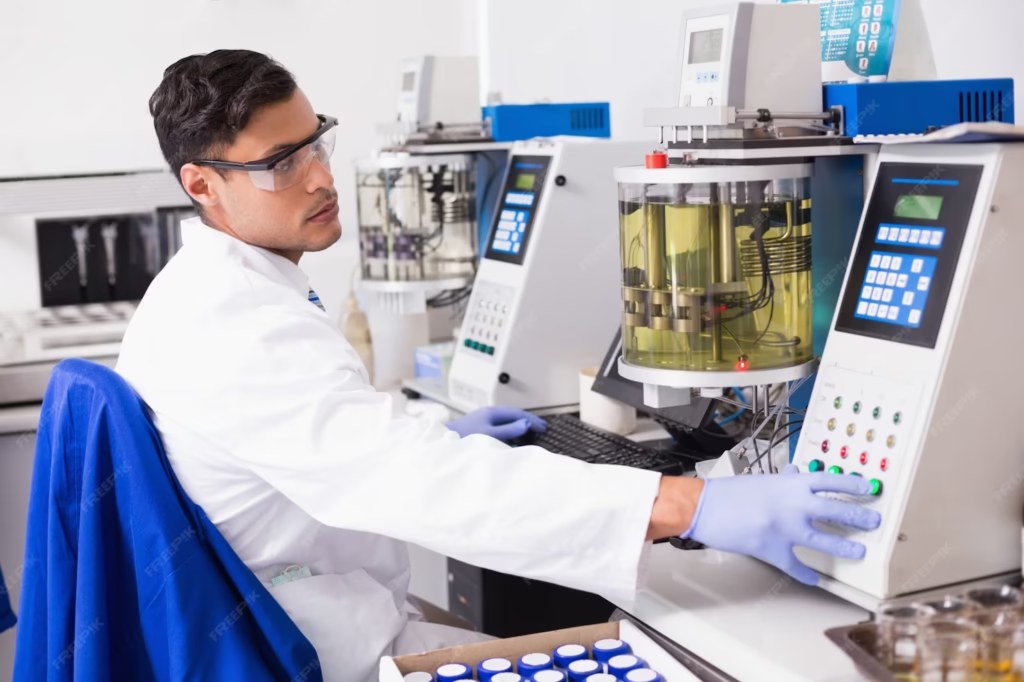
Designing pharmaceutical plant machinery that fully aligns with GMP Compliant Machinery Design standards is essential for safety, product quality, and regulatory approval. A recent case study from a mid-sized formulation plant in Gujarat showed how redesigning the granulation and compression equipment according to GMP Machinery Design principles reduced cross-contamination risk by 45% and improved cleaning efficiency by 60% within three months. This demonstrates why machinery design directly affects plant performance, CGMP adherence, and audit readiness.
As pharmaceutical manufacturing consultants, JD Pharma Consultants ensure that equipment selection and layout follow global regulatory expectations while supporting operational efficiency.
Why GMP Compliant Machinery Design Matters in Modern Pharma Plants
Every machine used in a pharmaceutical plant must support cleanability, traceability, material integrity, and contamination control. GMP-Compliant Equipment for Pharma ensures production processes are safe, repeatable, and audit-ready.
Key benefits include:
- Improved CGMP compliance
- Reduced downtime and faster cleaning cycles
- Higher-quality output with minimal human error
- Stronger audit preparedness for FDA, WHO, and EU GMP
For context, the US FDA and WHO provide clear standards for machinery design.
Core Principles of GMP-Compliant Machinery Design
To achieve fully GMP-Compliant Machinery Design, equipment must meet engineering, operational, and documentation standards that align with global regulatory frameworks.
Important design principles include:
- Cleanability and Hygienic Construction
- Equipment must be easy to clean with smooth, non-reactive surfaces.
- Dead zones, sharp corners, and dust-collecting gaps must be eliminated.
- Material Compatibility
- Contact parts must use stainless steel grades like 316L.
- Materials must not react with APIs or cleaning agents.
- Cross-Contamination Prevention
- Machines must support containment, HEPA filtration, or closed-loop systems.
- Automation and Digital Monitoring
- Integrated sensors reduce operator error and ensure repeatability.
- Safety and Ergonomic Design
- User-friendly access points for maintenance and changeovers.
These principles guide every stage of pharmaceutical plant machinery design.
Role of Plant Layout in Achieving GMP-Compliant Machinery Design
A well-structured layout of pharmaceutical manufacturing plant enhances process flow, prevents cross-movement of personnel and materials, and positions machinery in zones that reduce contamination risks.
When developing a pharmaceutical manufacturing plant layout design, consider:
- Dedicated HVAC-controlled zones for critical processes
- Material flow from raw materials to dispatch in one direction
- Machinery placement to reduce human intervention
- Utility piping and cable management for easy maintenance
- Segregation of high-risk operations like granulation and coating
JD Pharma Consultants specializes in integrating equipment with facility layout to ensure smooth, compliant operations.
Selecting the Right Machinery for GMP Compliance
Choosing GMP-Compliant Equipment for Pharma requires regulatory, operational, and technical evaluation. Key factors include:
- Validation Support – Manufacturers must provide IQ/OQ/PQ documentation.
- Automation Capability – Advanced controls support data integrity.
- Maintenance and Cleaning Time – Minimizes production disruption.
- Spare Parts Availability and Service Support – Reduces operational risk.
- Energy and Resource Efficiency – Supports sustainability and GMP compliance.
Partnering with experienced pharmaceutical manufacturing consultants like JD Pharma Consultants ensures your machinery meets regulatory expectations.
Understanding GMP Compliance Audit Services for Machinery
Before a plant goes into operation, GMP Compliance Audit Services verify equipment and facility readiness. Services include:
- Reviewing qualification protocols
- Inspecting equipment design and installation
- Verifying material compatibility and cleanability
- Checking automation, alarms, and interlocks
- Ensuring machinery supports data integrity and traceability
A strong audit report increases the credibility and reliability of your pharma facility.
Common Machinery Used in GMP-Compliant Pharmaceutical Manufacturing
Different dosage forms require specialized GMP-Compliant Machinery Design:
Solid Dose Manufacturing Equipment
- Blenders
- Granulators
- Tablet compression machines
- Coating machines
Liquid Manufacturing Equipment
- Mixing vessels
- Homogenizers
- Sterile filtration systems
Injectable Manufacturing Equipment
- Vial washers
- Filling and sealing machines
- Autoclaves and lyophilizers
Each machine must support cleanability, validation, automation, and documentation.
Best Practices to Ensure GMP-Compliant Equipment Design
- Document all machine specifications and material compatibility
- Perform periodic validation and preventive maintenance
- Train staff on equipment operations and SOPs
- Ensure utility qualification (HVAC, water, compressed air)
- Conduct internal audits before regulatory inspections
When done correctly, GMP Machinery Design becomes a long-term asset to plant performance.
FAQs
1. What is the role of GMP in pharmaceutical manufacturing?
GMP ensures that pharmaceuticals are consistently produced with the highest standards of quality, safety, and control. It governs the design of equipment, processes, and documentation to minimize contamination and errors.
2. Why is GMP important in pharmaceutical manufacturing?
GMP protects patient safety, ensures therapeutic consistency, and prevents contamination issues. It also ensures regulatory approval from bodies like the FDA and WHO.
3. What is GMP-compliant equipment design?
It refers to designing machinery that supports cleanability, material compatibility, automated control, validation, traceability, and safety.
4. How does plant layout affect GMP machinery compliance?
Plant layout determines material flow, equipment placement, zoning, and contamination control. Proper layout enhances safety and audit-readiness.
5. Why should companies consult experts for GMP machinery design?
Experts provide regulatory insights, engineering expertise, and equipment selection guidance, ensuring faster approvals and safer production lines.
Conclusion
Investing in GMP-Compliant Machinery Design is essential for pharmaceutical companies seeking operational excellence, regulatory compliance, and product safety. Partnering with JD Engineering and Consultants ensures your plant benefits from optimized pharmaceutical manufacturing plant layout design, advanced machinery selection, and ongoing GMP compliance support.
Looking to design or upgrade your facility with GMP Compliant Machinery Design?
JD Pharma Consultants offers expert engineering, plant design, equipment selection, and GMP Compliance Audit Services to help you achieve world-class standards.
Contact JD Pharma Consultants today to build a safer, more compliant pharmaceutical facility.